The situation
For many companies an internal audit is a box to tick: work through a checklist before the certification audit and file the report. This team wanted to do it differently, with an independent auditor who shows what works, where the risks are and what can be done better in practice.
They had the auditor, the experience and clients who got something out of it. What was missing was a site that showed it and brought in requests.
The website
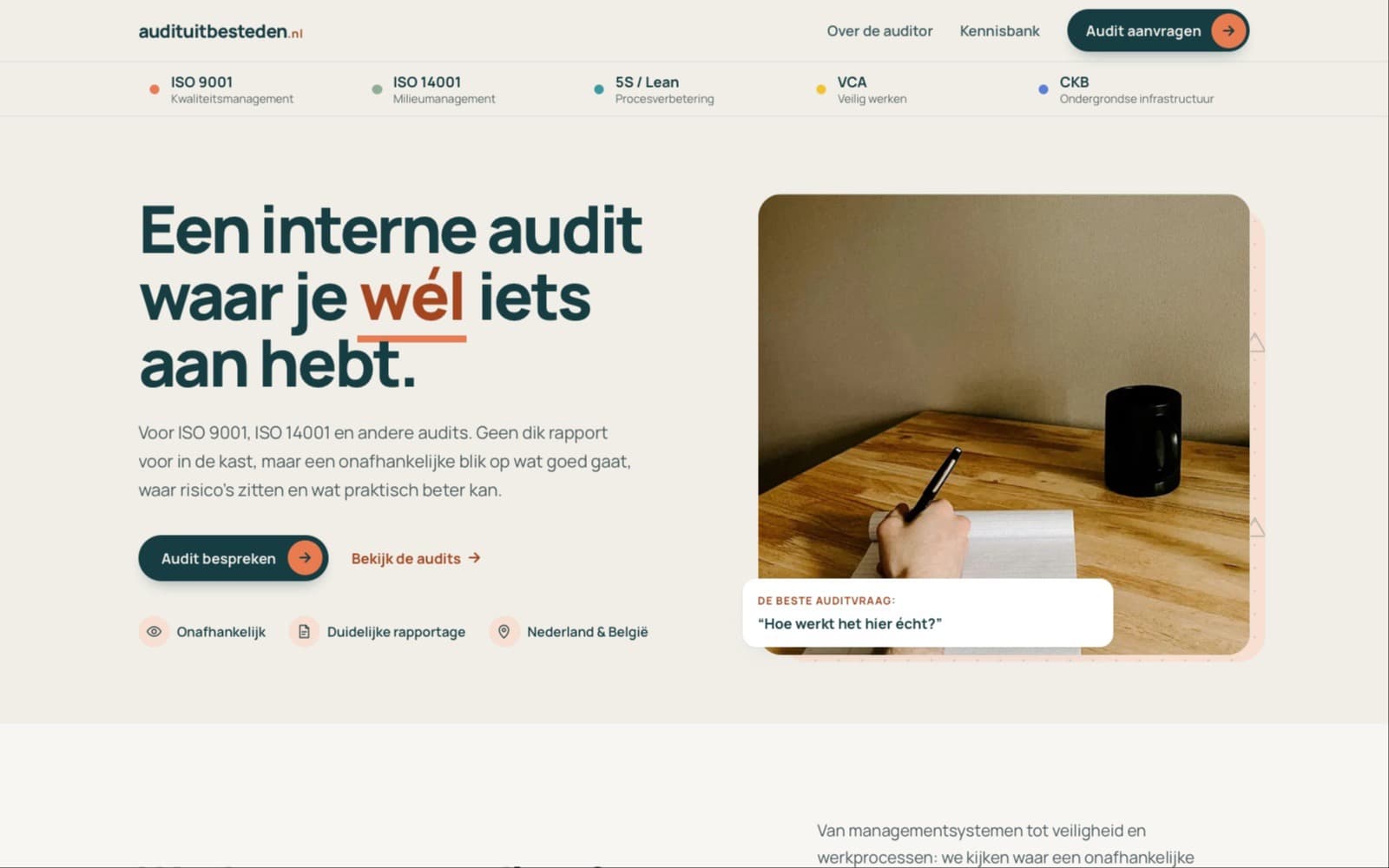
Five audits, each with its own colour. ISO 9001, ISO 14001, 5S and lean, VCA and CKB each have their own page and their own colour, so a visitor sees at once where they are. All five are always in the menu.
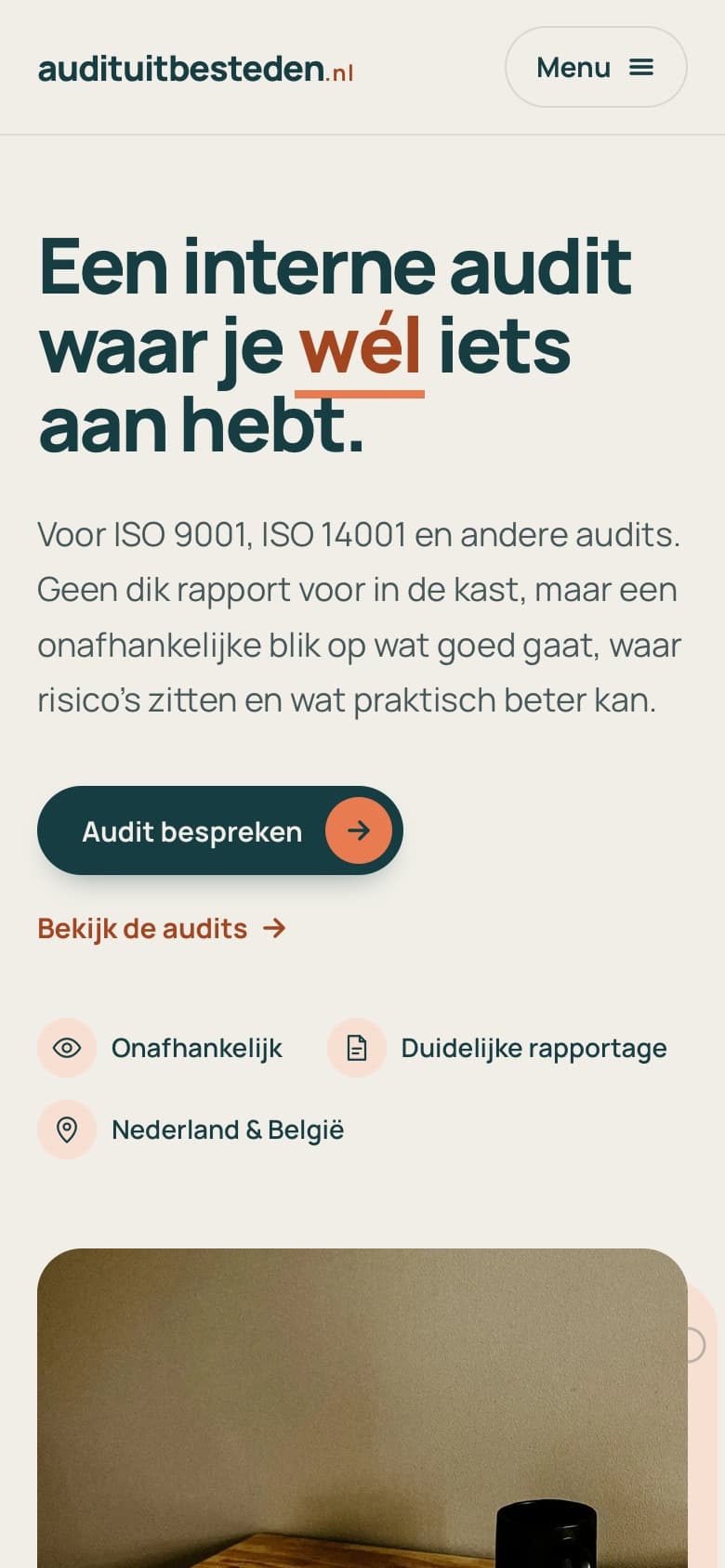
Calm and its own. A warm palette, plenty of space and photos of real shop floors and audit conversations. A site that fits an audit you take seriously, not a form you tick off.
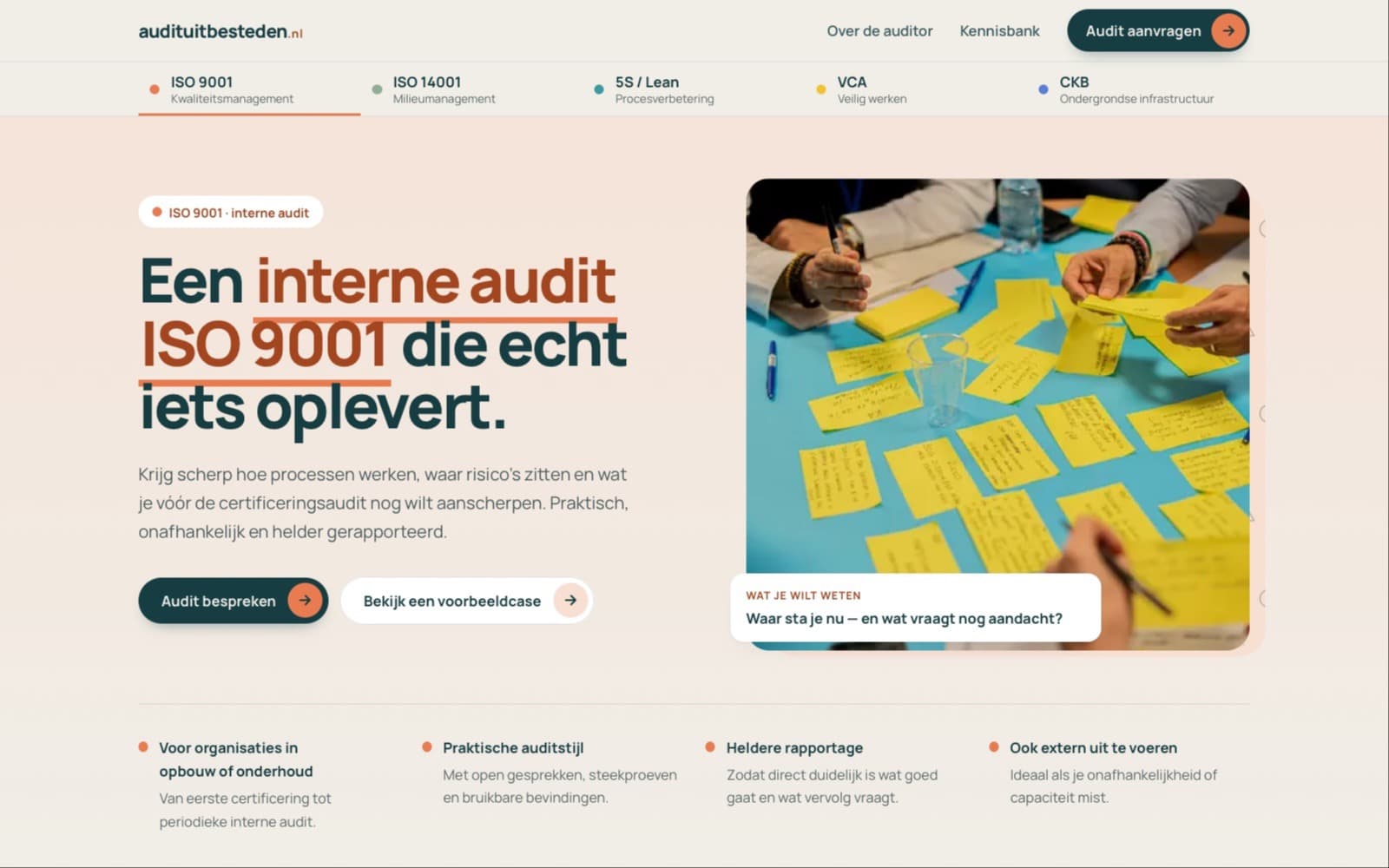
The whole story per audit. Each audit page explains what the standard asks of an internal audit, how the audit goes step by step, why you would have it done externally and what you know afterwards, with a sample case and articles alongside.
The auditor up front. You buy an internal audit from a person. A page of its own says who the auditor is and how an audit goes, and the homepage shows what clients got out of it.
A knowledge base of its own. New articles about audits, written for this site: whether an internal audit is required, how often to audit, when a checklist helps.
Requests that don't get lost
A request arrives by email and is also stored. An email that lands in spam doesn't cost them a job. The form keeps spam out without making a real visitor solve a puzzle.
Edited in-house
Texts, articles and photos sit in an editor the team works in themselves. A new article or a new photo doesn't need a developer.
Getting found
- A name that says what it is. The site started under a working title and got its final name and domain just before launch, in the words people search for.
- Every page tells Google what it is. The company, the audits, the questions people ask and the articles are described the way search engines want to read them.
- Sitemaps by type. Pages, audits, knowledge base and client cases each have their own sitemap, so new articles get picked up fast.
What changed for them
The internal audits have a place of their own, separate from the same team's software, Praxiq. Anyone looking for an audit sees within seconds which audits there are, who carries them out and how to request one. And the team keeps the site up themselves.
What we keep doing
Hosting, updates and backups, and SEO follow-up on the audit pages and the knowledge base, with new articles on what people actually search for.
 Visit the siteaudituitbesteden.nl