
The situation
Two founders with a course for people who want to work as a medical virtual assistant, and no website. The domain still pointed at an unpublished site builder page, so there was nothing to move and nothing to keep.
The job is easy to misunderstand. Is it medical? Do I need a background in healthcare? What do I actually do all day? A visitor who can't answer those questions leaves. The site had to answer them, and then ask for one small thing: an email address in exchange for a free checklist.
The website
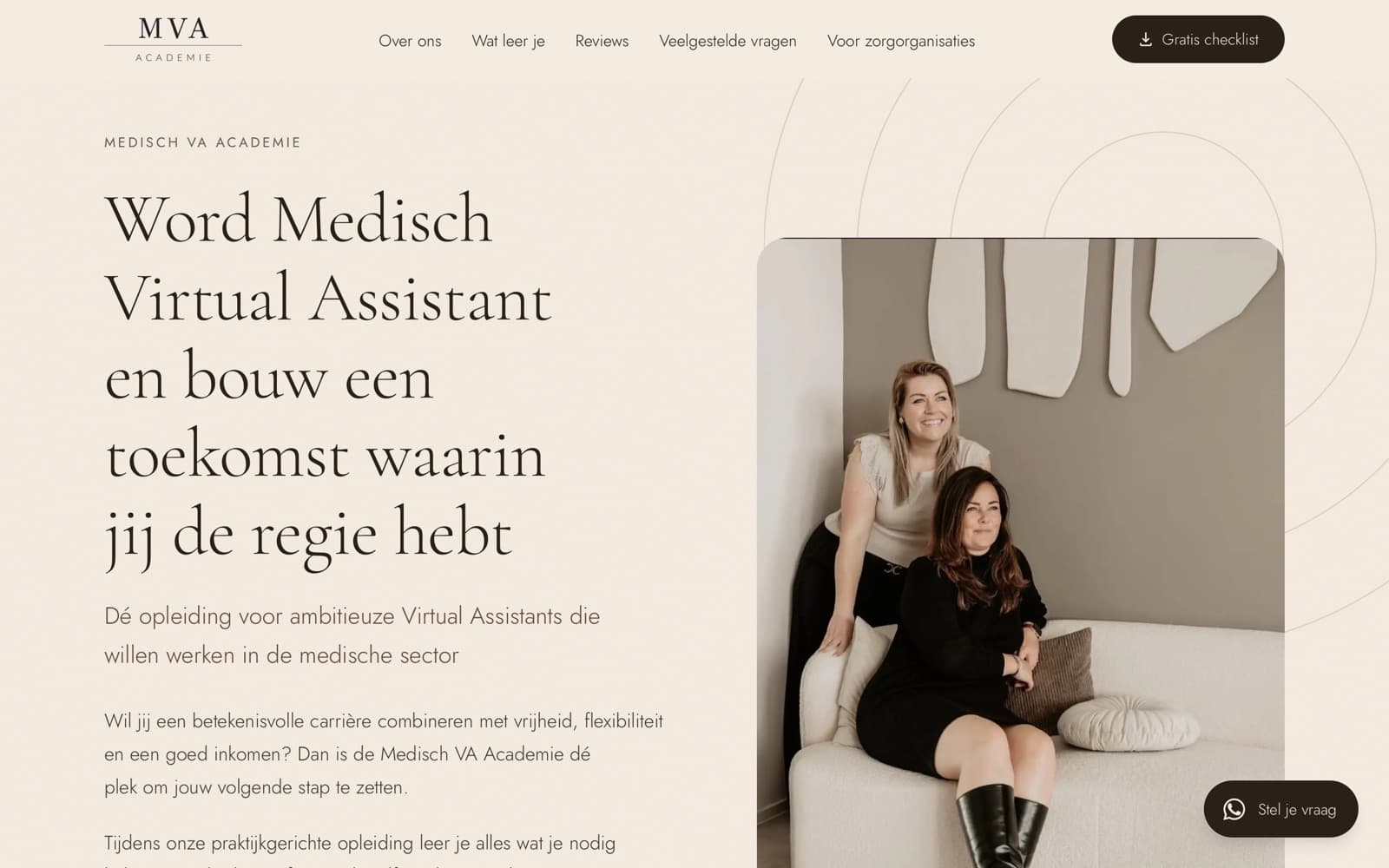
One page that tells the story in order. What a medical VA does, and what the job is not. Why care practices are looking for them. What you learn, who the course is for, how it is set up, and the questions people ask before they sign up. The order follows the doubts a visitor has.
One main step. The free checklist is the button in the header and at the end of each section. WhatsApp sits next to it for questions, so someone who would rather ask than fill in a form can do that.
The founders, not stock photos. The photos are from the founders' own shoot. The look is cream, sand and sage with a serif headline: calm, and not like a course shop.
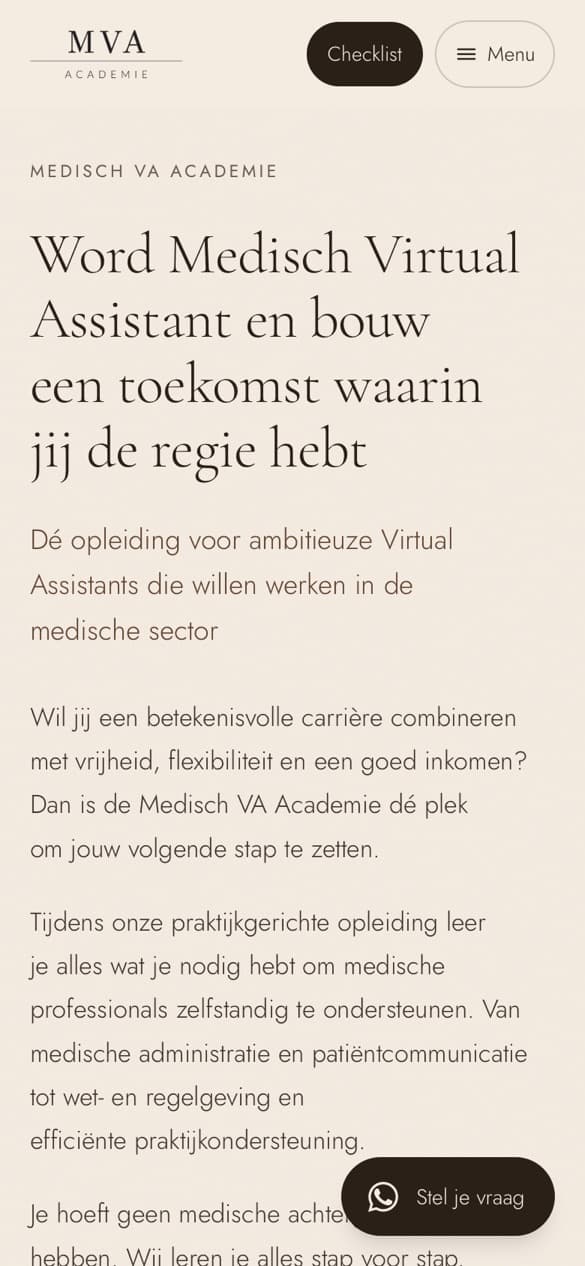
Readable on a phone. The header, the form and the buttons were checked at small screen widths until nothing overflowed or wrapped halfway through a word.
The checklist, from form to inbox
Someone fills in their name and email. The site stores the sign-up, adds them to the right list in the email platform and sends the checklist as a PDF link.
The PDF is not public. It can only be opened with the link from the email, so nobody can walk around the form and Google can't index the file.
Mail the founders can reword. The email text lives in the email platform, not in the site. The founders change a sentence there and it is live, without us.
Bots stay out. Automated sign-ups are filtered before they reach the list. A real person with an unusual entry isn't thrown away.
Unsubscribing is easy. Every mail has a link, the footer has a page for it, and an unsubscribe in the email platform is passed back to the site.
Old sign-ups clear themselves. Records are removed automatically after a set period, in the site and in the email platform.
A page for care organisations
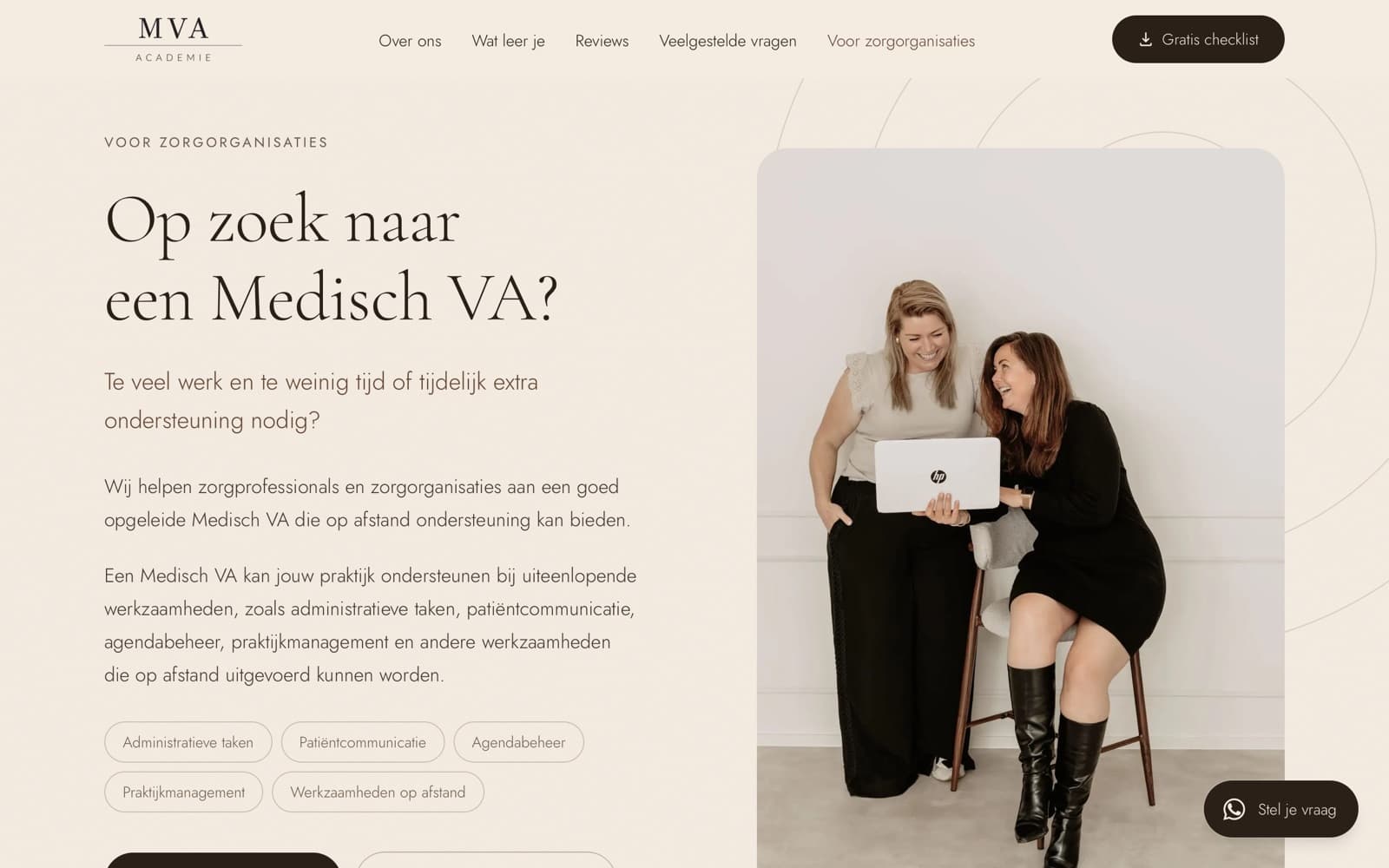
Next to the students there is a second audience: practices and care organisations that want to hire a medical VA. They have a different question and need a different page.
Its own page and its own contact. It lists the tasks a medical VA can take over, with a short form and a WhatsApp number of its own. The prefilled WhatsApp message asks about support from a medical VA, not about the course.
The site follows the visitor. On that page the header and footer speak to organisations. On the rest of the site they speak to students.
Getting found
Straight onto its own domain. The site went live on medischva-academie.nl with one address as the main one and the www version pointing to it. Test addresses are kept out of Google.
Course and questions marked up. The course details and the list of questions are described to Google in a form it can read.
Cookies only on a yes. Visitor statistics are switched on only after consent, and refusing works as well as accepting. The consent can be changed again from the footer.
What changed for them
The founders have a page they can send in a message or put in a bio, and a list that fills itself. Students get the first answers without writing to anyone. Care organisations have somewhere to go that isn't the course page.
Afterwards
The site is not finished when it goes live. After launch we added the care-organisation page, split the contact route for it, added the unsubscribe flow and tightened the privacy side. Legal texts come from the client, and anything in them that doesn't match what the site does is listed for them to review, not rewritten by us.
Hosting, monitoring and updates run on a fixed monthly fee, and the email setup is kept working when the platform changes something.
 Visit the sitemedischva-academie.nl