The situation
Mavi Moments is a personal service for people who own, or want to own, a home on the Catalan coast and live somewhere else: the Netherlands, Belgium, France, England or another part of Spain. They come to buy with confidence, to stop managing the house themselves, or to decide what to do with it: rent it out, sell it, pass it on.
The service is built on trust and calm, so the website had to be too. No listing-portal urgency, no banner shouting about offers. A visitor should feel understood and safe enough to book an intro conversation. That is the one job of the site.
The website
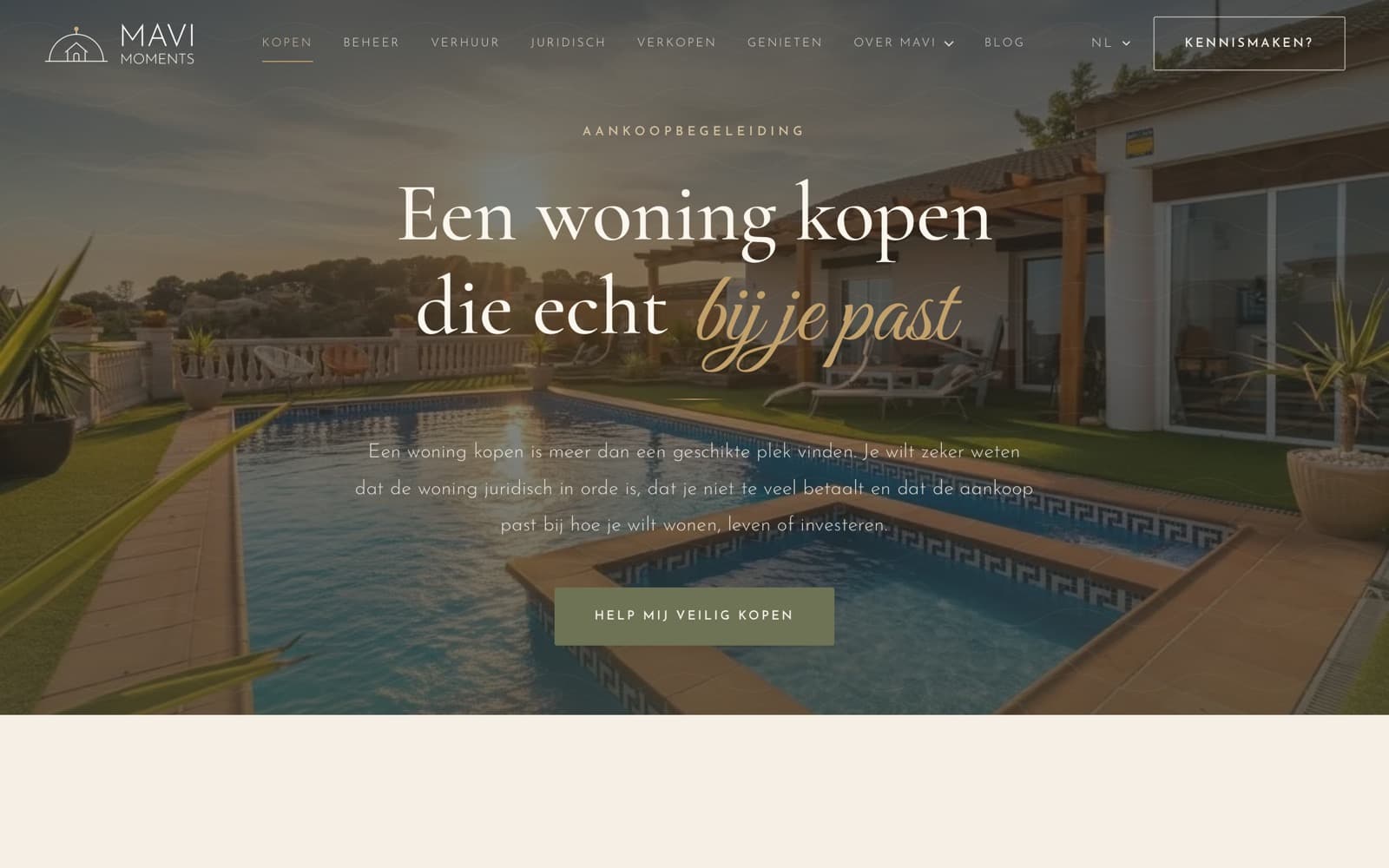
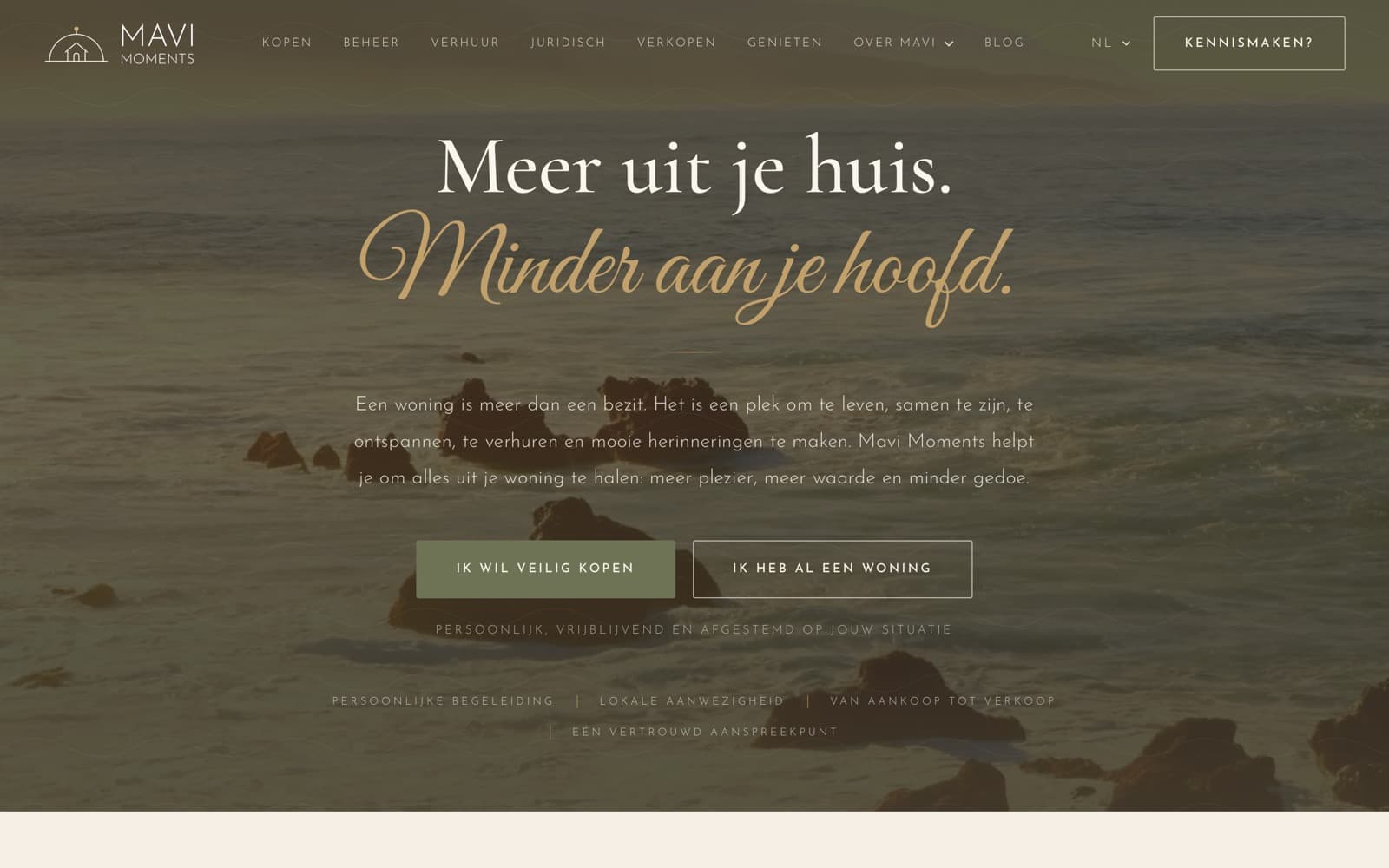
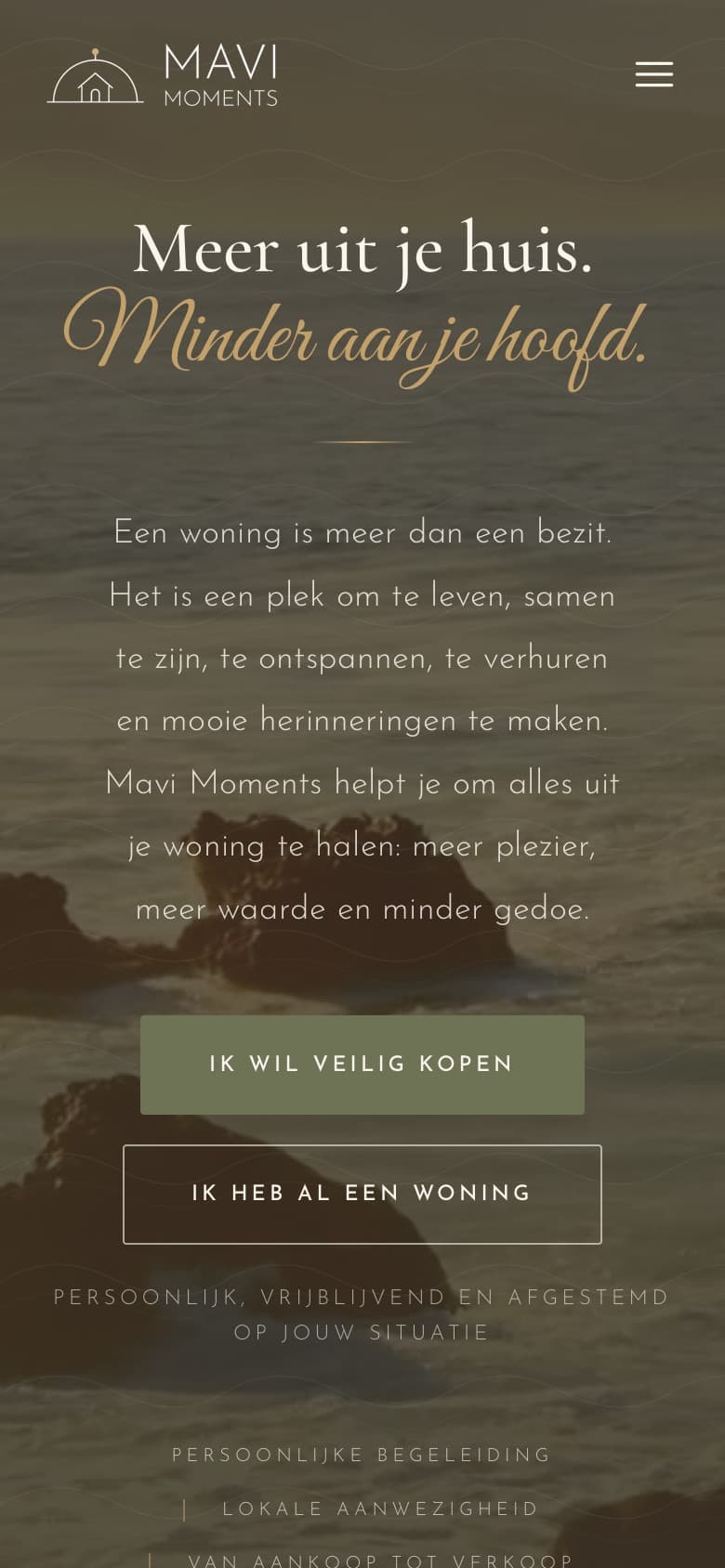
A quiet, editorial design. Large photography of the coast, a refined serif for headlines, a script accent used sparingly, cream and olive instead of bright colours. The headline on the homepage is the whole promise: more from your home, less on your mind. The logo and typeface follow the brand the owner already had.
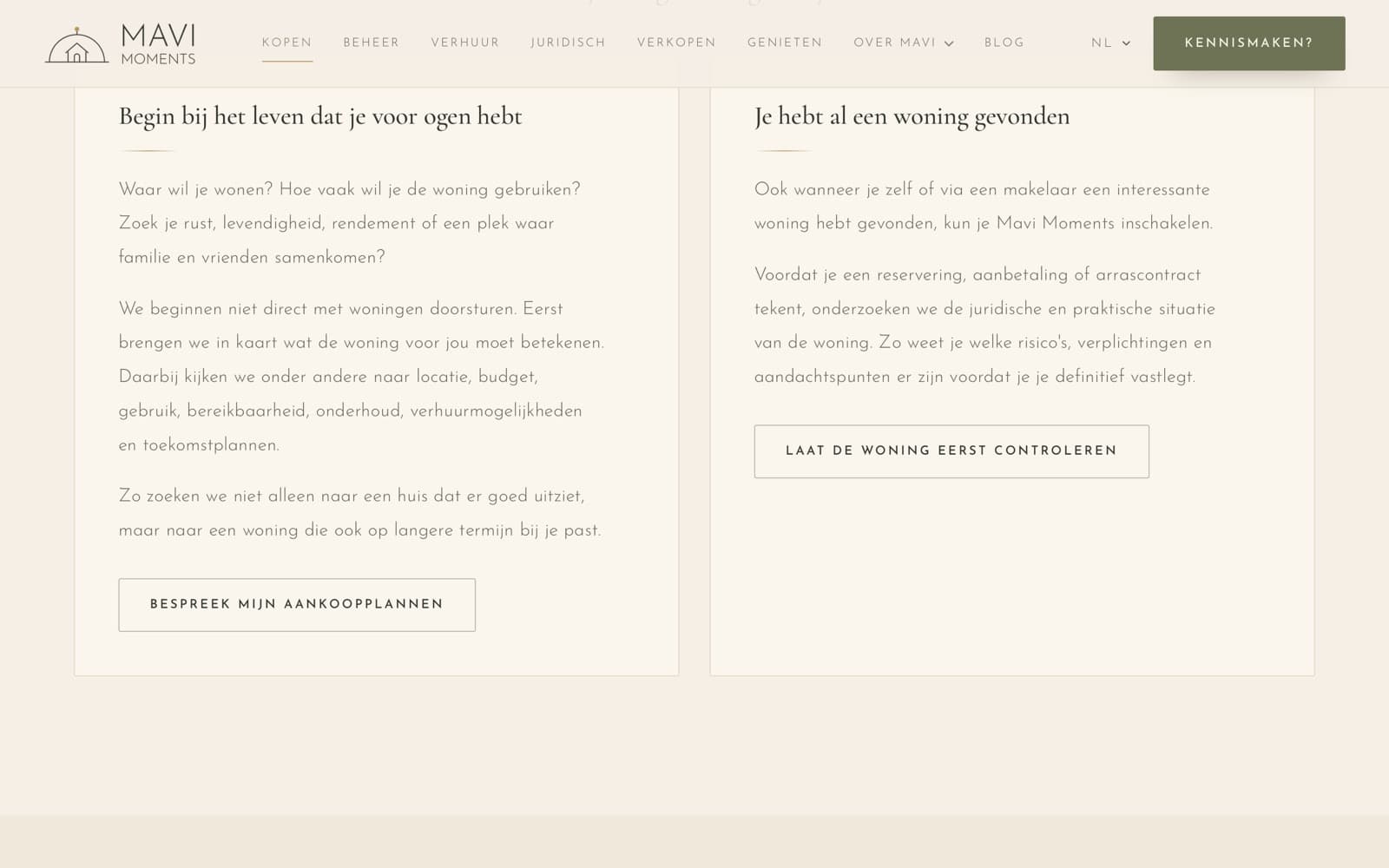
One page per situation. Buying, managing, renting out, legal matters, selling and enjoying the house each have their own page, written for that reader. A visitor who is weighing a purchase and one who already owns a house see different first steps.
Six languages, each with its own voice. Dutch, English, Spanish, Catalan, German and French. Every language is written for its readers, with the right form of address, and tells Google which page is its counterpart in the others. A German owner lands on the German page.
Real photography and a short video. The homepage opens on a slow loop of the coast. The video steps aside for visitors who have asked their device to reduce motion.
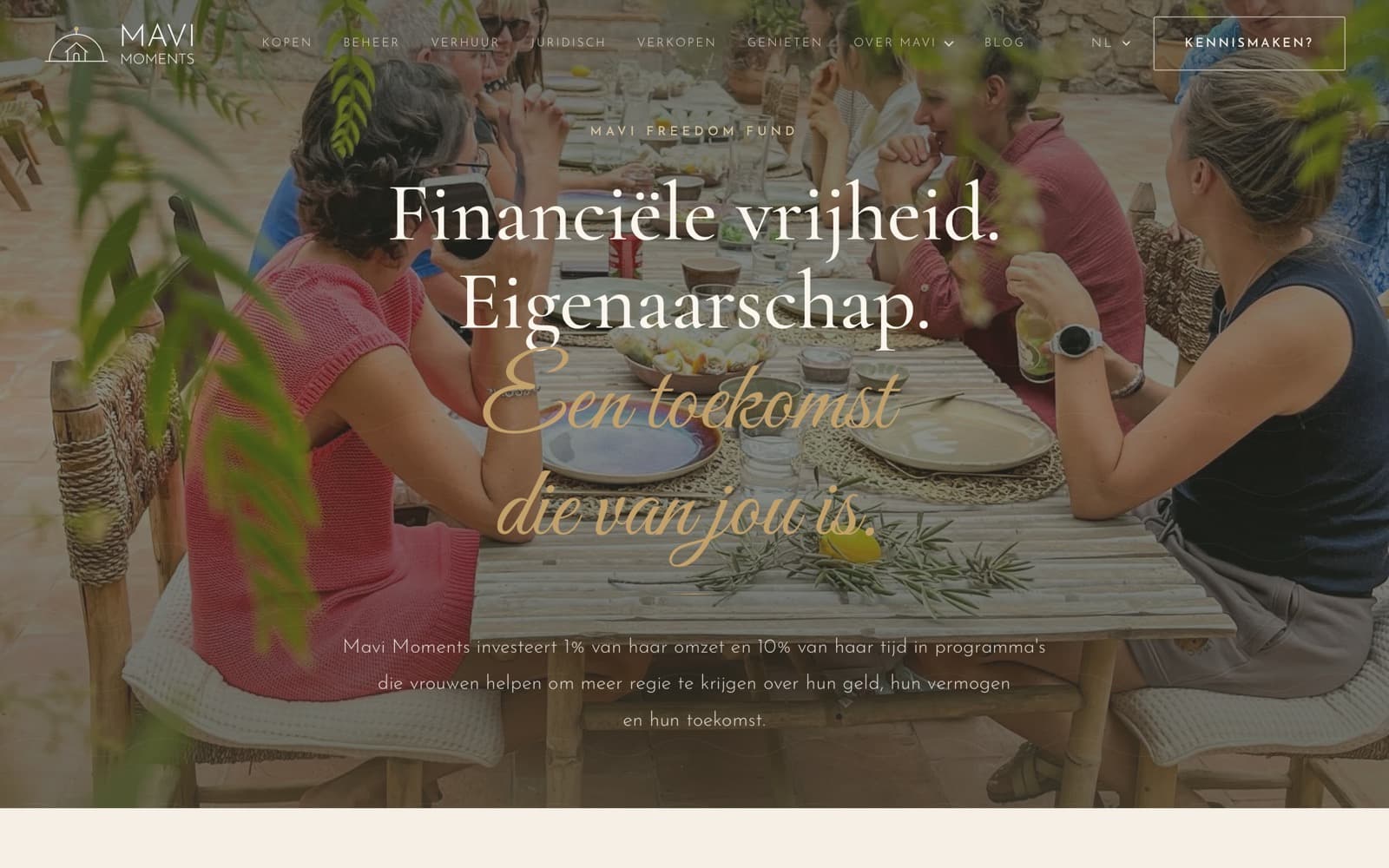
A page for the Mavi Freedom Fund. The company puts a share of its revenue and time into helping women gain more control over their money. That has its own page for a different reader, reachable from the homepage, the about page and the footer.
Editing it themselves
The owner can change a sentence without calling us.
Pages as building blocks. Every page is made of sections the owner can edit or add to, in every language. The menu is editable too, including submenus.
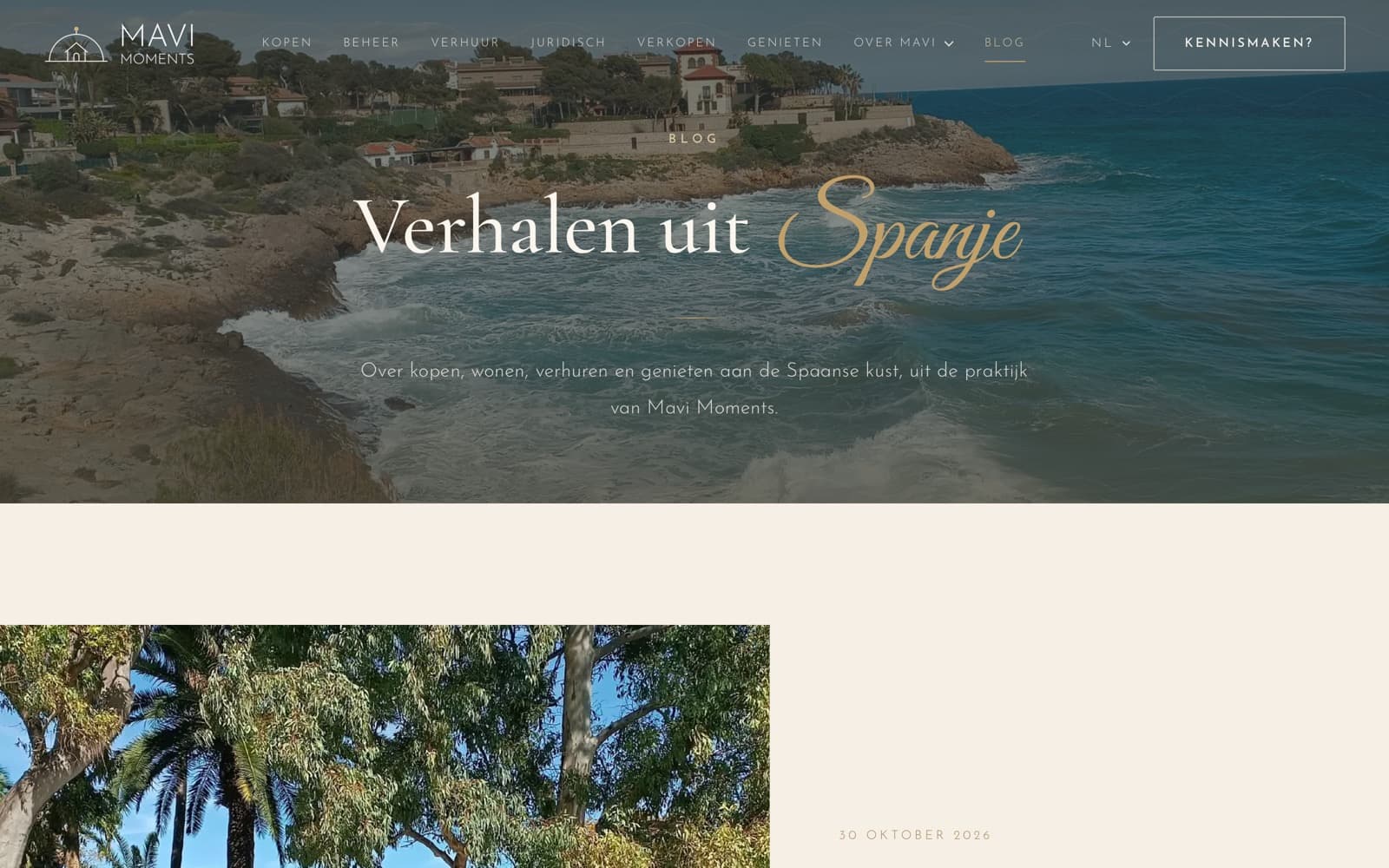
A blog in six languages. Articles on buying, selling, rental rules and local taxes, each with its own address per language. An article only appears in the languages where it has been written and published, so there are no half-translated pages.
Safe by design. The editor sits behind a login with a lockout after repeated failures, and publishing is checked per language, so one language cannot quietly shift out of line with the others.
Enquiries that arrive
Every request from the contact form goes to the owner's inbox with the visitor's address as reply-to. The visitor gets a confirmation in their own language. The same enquiry is also added to the client portal we built for them, so it is not lost in a mailbox.
Spam is held, not thrown away. Forms like this attract bots and the odd real person with a strange message. Suspicious requests are held for a look instead of silently dropped, so a real owner still gets an answer.
Intro calls in one click. The main button books a conversation straight into the owner's calendar.
Getting found
- Every page in every language is in the sitemap, 92 addresses in all, with the language alternates search engines expect.
- Titles and descriptions per page come from what the page says, so they are never empty or copied.
- Structured data tells Google what the business is, where it works and in which languages.
- Faster on a phone. In Google's mobile speed test, three key pages went from scores between 84 and 91 to between 94 and 95 after we reworked the images.
- Analytics only after consent. The site measures visits only for people who accept, and stops when they withdraw. A cookie notice and privacy page are in all six languages.
This is SEO in the plain sense: pages that load, say what they are and exist in the right language.
What changed for them
There is one website where there used to be a holding page. Owners in six countries read it in their own language. Requests land in the inbox and in the portal at the same time, and the owner writes blog posts and changes pages without waiting for a developer.
What we keep doing
The site is live and indexed. We keep it updated, fix what we find, and add what the business asks for next, such as new pages and articles. Security updates go in as soon as they come out, and the hosting, backups and monitoring stay with us.
 Visit the sitemavimoments.com