
The situation
A holiday apartment sounds simple until the emails start. A guest asks for dates, the owners check a calendar, work out the price by season, write a quote, wait for a reply, send payment details, and later have to collect the data every guest must give for the Spanish traveller register. Guests write in Dutch, French, German or English, so every message also has to be in the right language.
The website
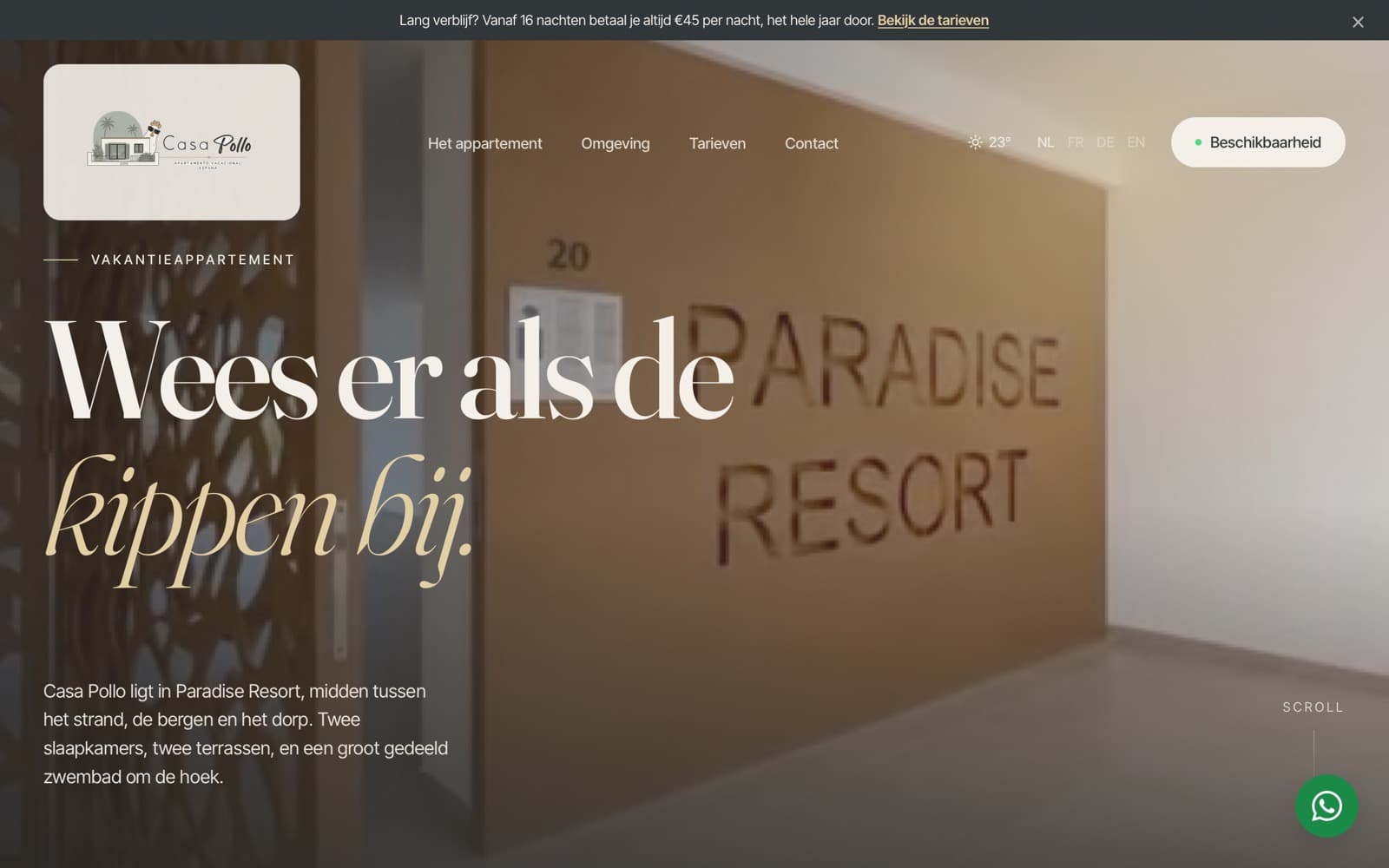
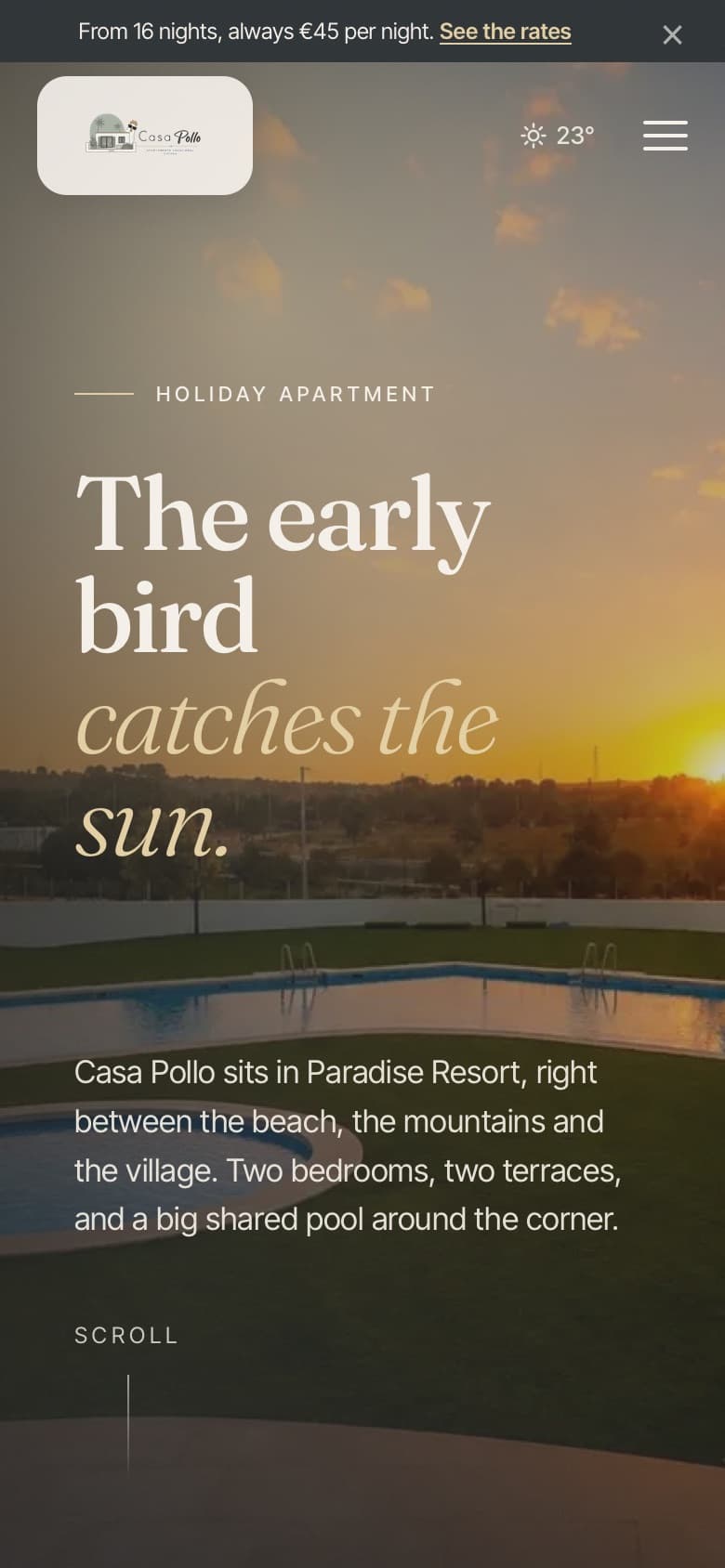
One site in four languages. Dutch, French, German and English, each with its own address, so Google shows the right language to the right guest. The address decides the language, not the browser.
The apartment, room by room. Floor plan, photos, the terraces, the resort and the surroundings, with the current temperature at the top of every page.
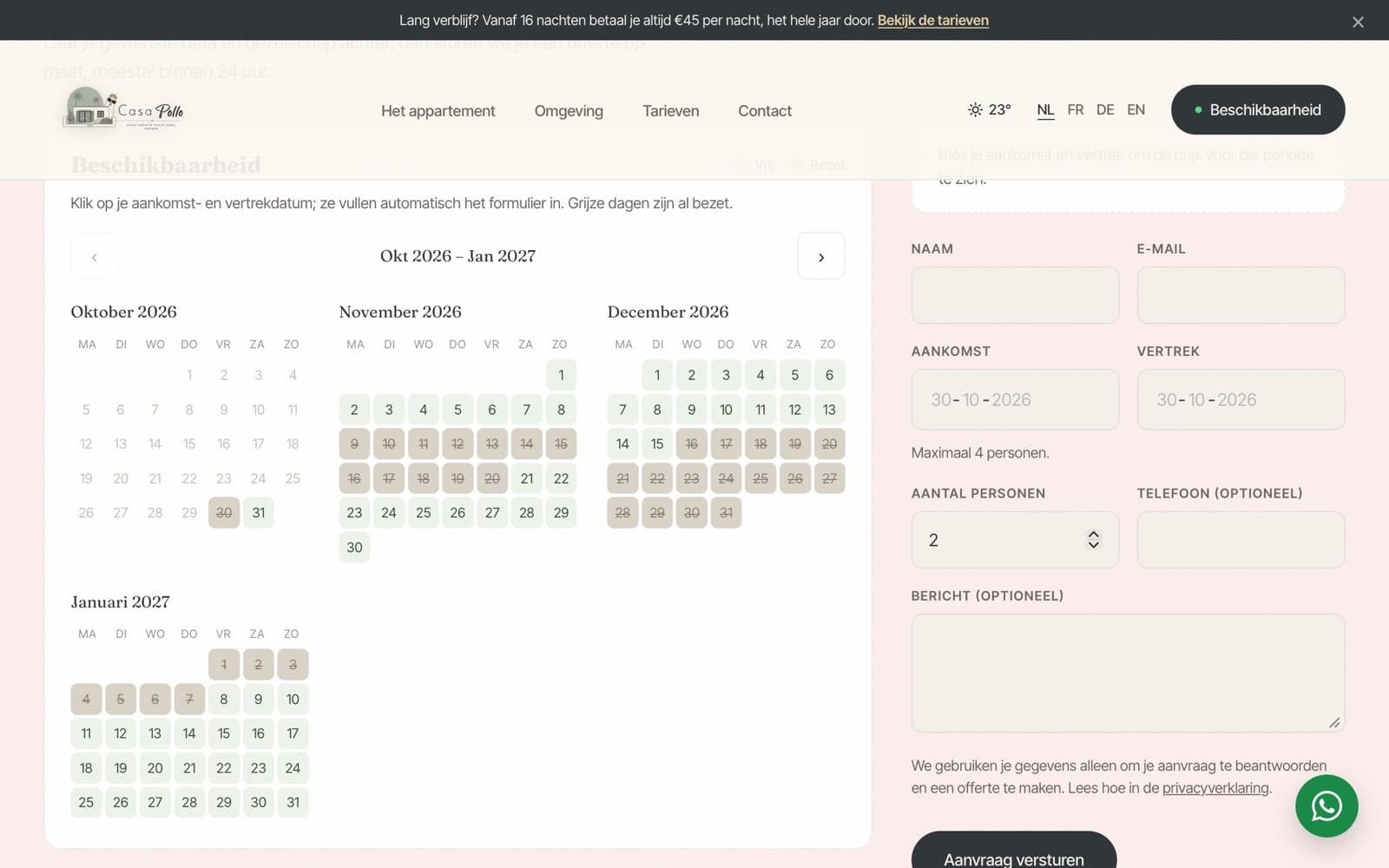
A calendar that is always right. Guests see which dates are taken and click their arrival and departure date. The owners block dates in their own screen, and the form refuses a period that overlaps one.
Long stays. There is no minimum number of nights. From 16 nights a separate long-stay rate applies all year, and the site and the quotes say so.
From request to booking
Behind the site sits a small back-office the owners use every day. The steps are the same for every guest.
A request comes in. The owners get a message by email, the guest gets a confirmation in his own language. Nothing is reserved yet.
The quote is calculated. Nights, season, cleaning and linen are worked out from the owners' own rates. They can change any amount before it goes out.
The guest accepts with one click. The quote goes out as a PDF with an accept button. The requested dates are held for 24 hours. If the guest does not reply in time, the dates open up again by themselves.
The invoice and payment details follow. Accepting creates a numbered invoice and sends the payment instructions: a deposit first, the rest before arrival.
The owners tick off payments. The bank is not connected, so the owners mark a deposit or the full amount as received. The guest gets a confirmation mail in his own language. A step that is still open two weeks before arrival turns red.
Guest registration. The guest receives a link and fills in the traveller details himself before arrival. The owners see when it is done and copy the data into the official register.
A handbook for the owners explains each step in plain language.
Found by the right guests
Every page has its own title, description and link to the other languages, there is a sitemap, and analytics only load after the visitor has accepted cookies. Forms are limited per visitor so they cannot be flooded.
What changed for them
Requests no longer start a chain of emails written by hand. The owners see what needs doing today on one screen, guests get an answer in their own language, and the invoice, the payment reminder and the registration link no longer depend on someone remembering them.
What we keep doing
The booking flow gets small improvements when the owners run into something, such as the long-stay rate and the payment tick-off. Hosting and upkeep and the back-office are part of the same agreement.
 Visit the sitecasapollo.com