
The situation
Biobizz started in the Netherlands in 1992 and has its office in Spain. The products travel further than the company does: most of the shops that sell them are served through distributors, spread over dozens of countries. Their old website was a WordPress site. Inside the company, work ran on spreadsheets and Word templates for agreements.
The brief was the same for all of it: make the work simpler for the people doing it, and make what the outside world sees as good as the product.
The website
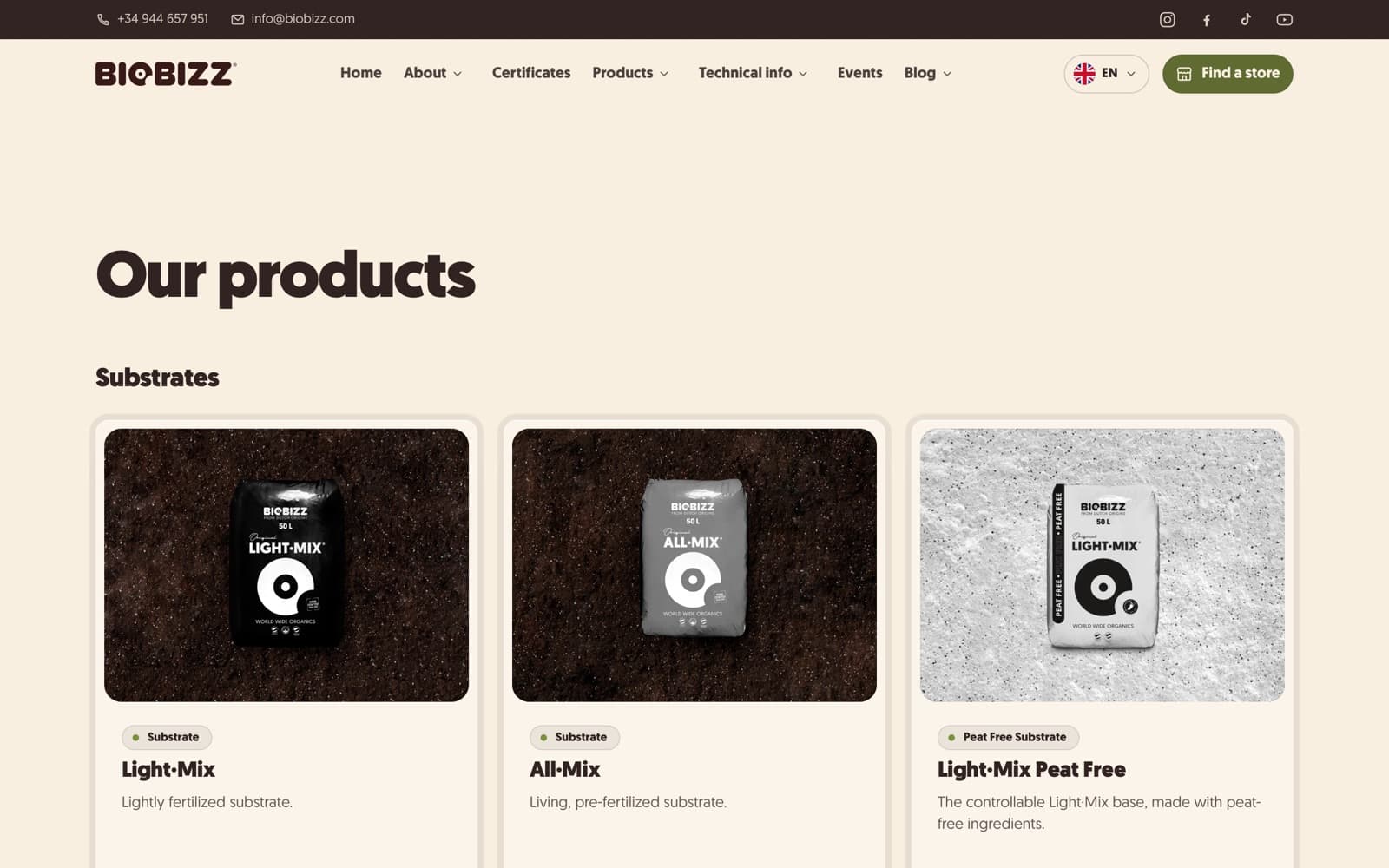
A brand site that teaches. Growers arrive from search and from their phones, often in a garden or a grow room. The site is built around that: the products, the dosing schedules and the growing guides come first, in plain language, and the shop locator sits one click away.
Seven versions for seven markets. UK English, US English, German, Spanish, French, Italian and Portuguese. Each market gets wording that fits it, and each page points search engines to its counterpart in the other versions.
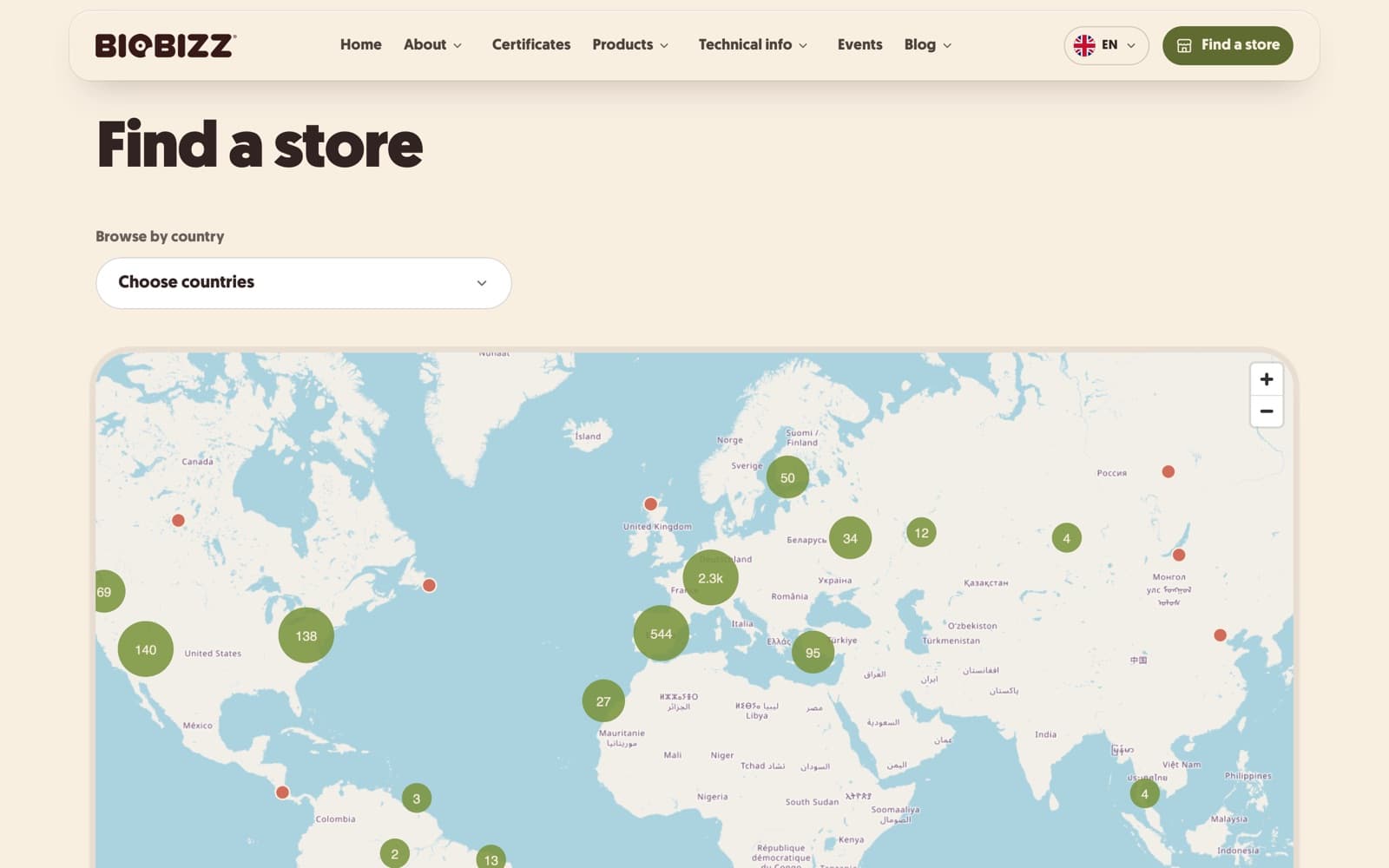
Find a shop anywhere. A map of the shops that sell Biobizz, grouped per country and that you can zoom into. A grower in Finland and one in Chile get the shop nearest to them.
Guides and the blog. The technical section holds dosing schedules, certification guides and product information. The marketing team publishes articles and reviews themselves, sorted into categories, in the same editor they use for the rest of the site.
Fast, and kept that way. The pages load quickly on a phone, images are compressed in modern formats and the site scores 94 out of 100 in Google's mobile speed test.
The tools behind it
Next to the website we built two internal tools that share one look and one way of signing in: you enter your work email and get a six-digit code, no passwords to lose. They are in English and, where it matters, Spanish.
Expense Hub
From receipt to payment.
Start with a photo or a PDF. An employee uploads a receipt or an invoice, adds what it was for and sends it on.
The right person approves. A manager looks first, then finance. Totals are always recalculated from the lines, so a wrong sum cannot slip through.
Kilometres per country. Mileage is claimed with the rate of the country it belongs to, including the UK, where the unit is the mile. The route is attached.
Ready for payment. Finance gets a payment batch, either as a checklist or as a bank file, and the expenses go into the accounting system. The tool never moves money by itself.
Agreement Hub
For contracts and NDAs, instead of Word files in e-mail.
Locked templates. An administrator publishes a version of a template. The person who needs an agreement fills in a short form with a live preview and cannot change the clauses.
Signed in order. Each party signs in turn. The finished PDF carries a certificate with who signed when, and the file can be checked afterwards to show it has not been changed. There is a log of everything that happened to a document.
Several parties and entities. A single NDA can cover more than two parties and any of the Biobizz companies.
What changed for them
Expenses no longer wait in someone's inbox. Agreements have one route from request to signature, and the people who sign can see where they stand. And the website explains the product in the language of the visitor and shows where to buy it.
What we keep doing
The tools grow with the team: this month an extra entity in the expense tool. The website gets new guides, categories and shops. Security updates go onto all of it at the same time, the sign-in is protected against repeated attempts, and hosting, backups and monitoring stay with us.
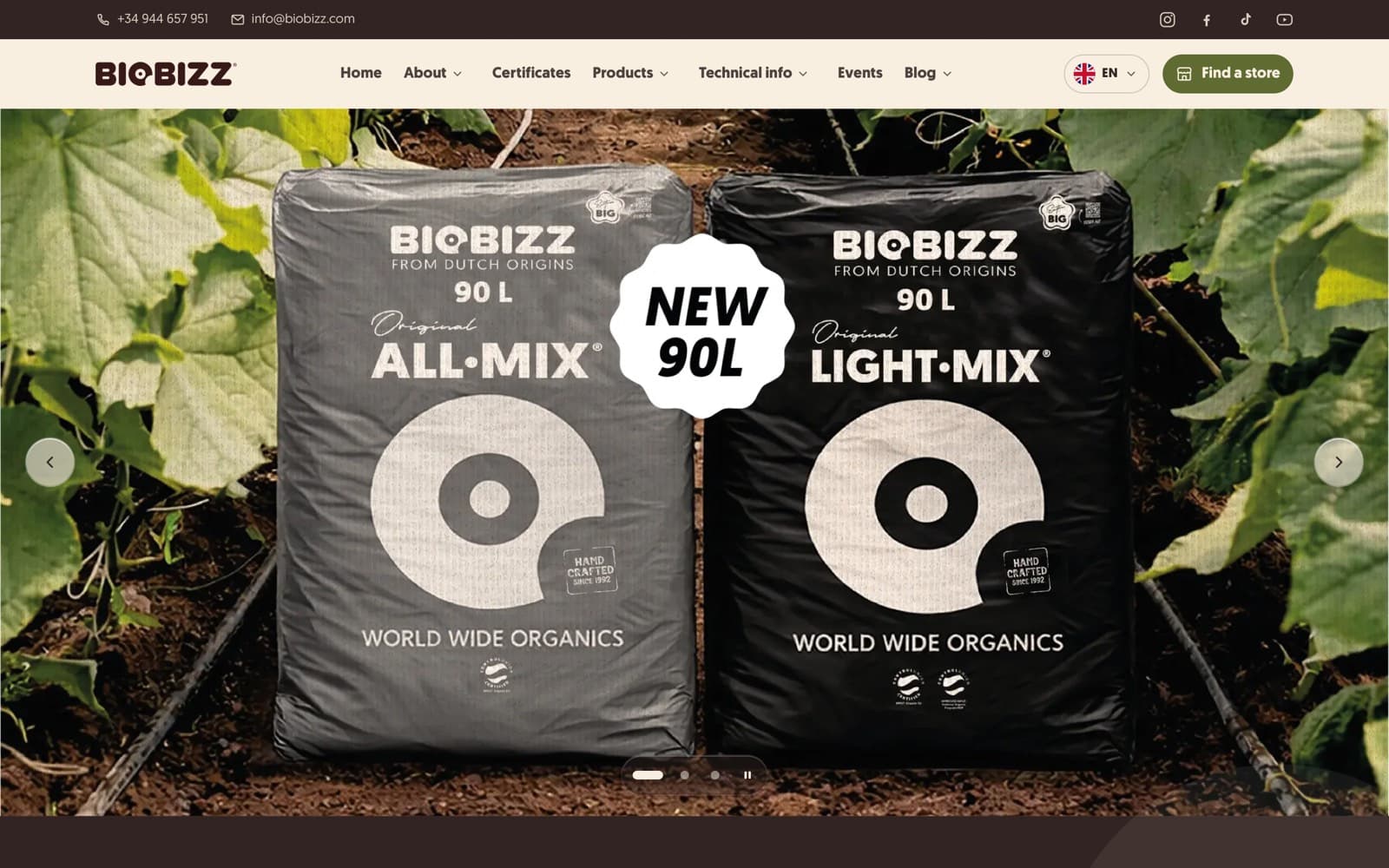
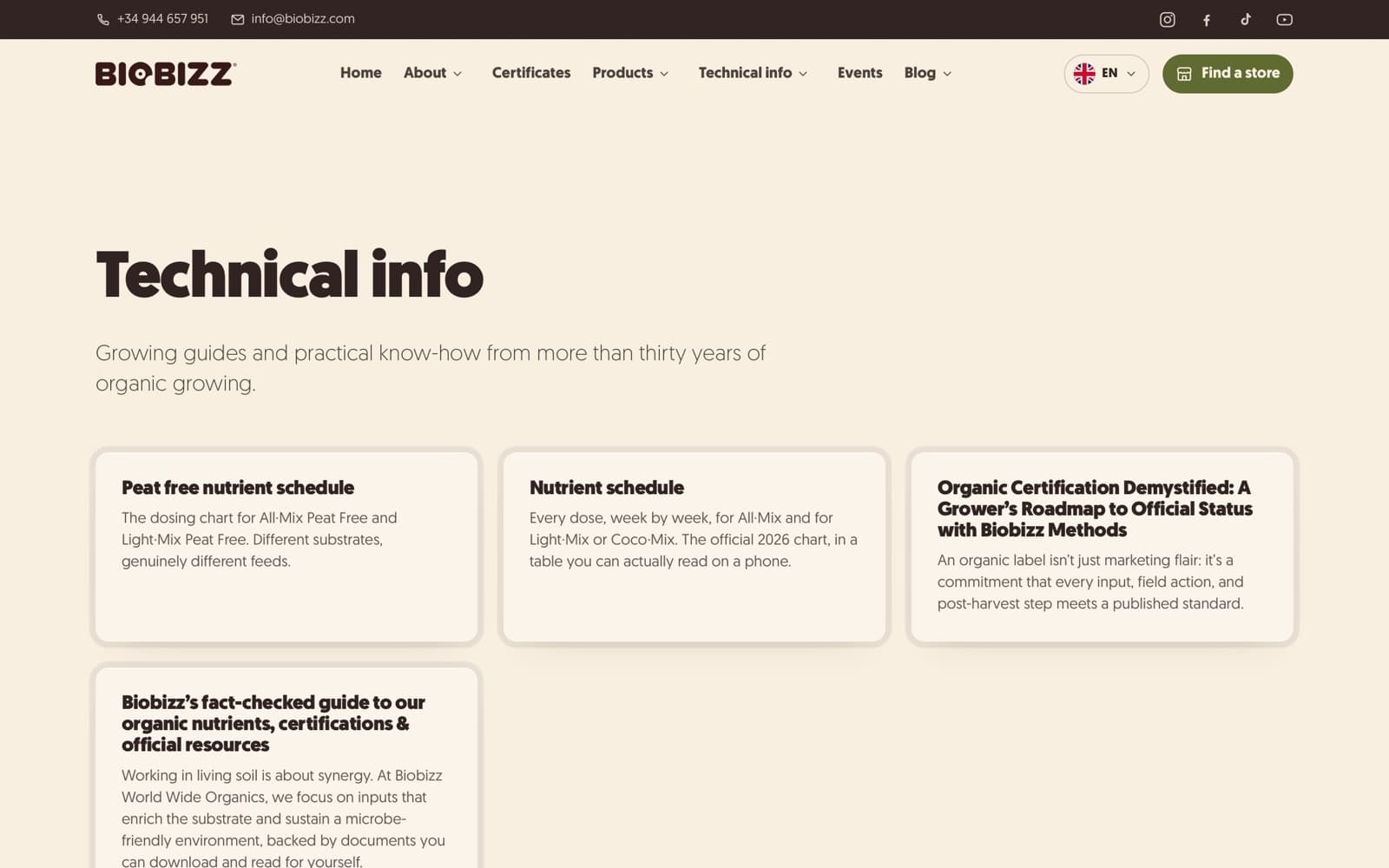
 Visit the sitebiobizz.com