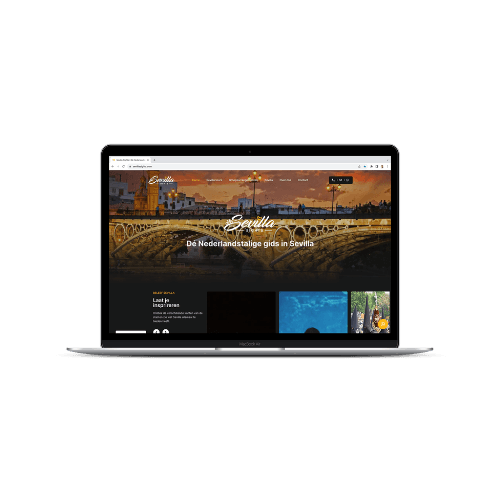
A lot of the small businesses we meet on the Costa Brava have a website, a CRM or a social media package that came through Kit Digital. A surprising number of them don't know what exactly they signed, what the voucher paid for, or what happens when the twelve months of service end.
This article is the plain version, based on the programme's own rules. It's not legal advice. If you're in the middle of a Kit Digital agreement and something is wrong, talk to your gestor or to Red.es directly.
What is Kit Digital?
Kit Digital is a Spanish government subsidy programme to help small and medium businesses and the self-employed adopt digital tools. It is run by Red.es and funded through Spain's Recovery Plan with European NextGenerationEU money. Its rules (the bases reguladoras) are in Orden ETD/1498/2021, which has been amended several times since.
The subsidy is called the bono digital: a right to a fixed amount of money that you don't receive yourself, but hand over to the company that delivers the solution.
Is it still open?
As of October 2026, the official Acelera pyme portal says plainly that the Kit Digital calls have ended. A further amendment published in January 2026, Orden TDF/39/2026, adjusted the rules so that unspent budget is reinvested in the programme and new calls under the same rules remain possible. We haven't seen one published. If you're reading this to apply, check acelerapyme.gob.es first.
So this article is mostly for two groups: businesses that have a bono or an agreement in progress, and businesses whose twelve months of Kit Digital service are ending and who want to know what they're left with.
How much was the voucher?
The amount depended on the size of the business. After the 2024 amendment (Orden TDF/435/2024), the segments are:
- Segment I, 10 to fewer than 50 employees: 12,000 euros
- Segment II, 3 to fewer than 10 employees: 6,000 euros
- Segment III, 0 to fewer than 3 employees: 3,000 euros (originally 2,000)
- Segment IV, 50 to fewer than 100 employees: 25,000 euros
- Segment V, 100 to fewer than 250 employees: 29,000 euros
Self-employed people fall into the segment that matches the number of people they employ. Segment IV also includes some companies with fewer than 50 employees that count as medium-sized because of their turnover and balance sheet.
The bono isn't spent as one lump. Each category of solution has its own maximum per segment. In the original rules, for example, a website was capped at 2,000 euros in every small-business segment, and e-invoicing at 500 or 1,000 euros depending on the segment.
What can Kit Digital pay for?
Only solutions from the programme's catalogue, delivered by an approved agent. The original rules set out ten categories:
- Website and internet presence
- E-commerce
- Social media management
- Customer management (CRM)
- Business intelligence and analytics
- Process management
- Electronic invoicing
- Virtual office services and tools
- Secure communications
- Cybersecurity
Later amendments added advanced internet presence and marketplaces (Orden ETD/734/2022), and managed cybersecurity, customer management, BI and process management with associated AI, and a "secure workstation" for the smallest segment (Orden TDF/435/2024).
Each category comes with minimum requirements. For a website, the rules ask for, among other things:
- a new domain owned entirely by your business, for at least twelve months
- hosting for at least twelve months
- at least three pages or sections
- a responsive design
- accessibility at WCAG 2.1 level AA
And for every category: incident support with resolution in under 24 hours, and the training you need to use the solution, including the basics of data protection compliance.
What can't it pay for?
The rules are specific. Not eligible:
- VAT. The bono covers the solution, not the IVA on it. You pay the VAT yourself.
- Hardware. Since the 2024 amendment there are two exceptions: a device that is essential to deliver the contracted solution, and the secure workstation category for the smallest segment.
- Telecoms and internet connectivity.
- Fees for getting the subsidy, such as an adviser or gestor who processes the application for you.
- Income and other taxes, interest, fines, legal costs, financial costs, building work and land.
Two more limits matter in practice. The cost of a solution can never be above market value. And anything outside the catalogue isn't covered, however digital it is.
How does the agent and beneficiary relationship work?
This is the part most people found confusing, because the money never passes through your account.
1. You get the bono. Red.es grants you the subsidy. At that point it's a right to payment, not cash.
2. You choose an agent. Only a Agente Digitalizador Adherido, a company approved for the programme and listed in the catalogue, can deliver a Kit Digital solution.
3. You sign an agreement. The Acuerdo de Prestación de Soluciones de Digitalización sets out what the agent will deliver, the deadline, the obligations of both sides, and how much of your bono goes to that solution. Under the rules, both parties had to sign within six months of the grant being notified, unless the call set a shorter period.
4. You pay by handing over the bono. You cede the relevant part of the bono to the agent, and you pay whatever the subsidy doesn't cover yourself, including the VAT.
5. The agent justifies, Red.es pays. The agent submits the evidence that the work was done, on your behalf. Only after it has been checked does the agent receive the money. Payment comes in two parts: one after the implementation phase is justified, the rest after the second phase of the service. For a website, the rules weight those phases 70 and 30 percent.
You are the beneficiary, and that matters. The rules say the agent justifies the subsidy in your name, but you remain the one ultimately responsible for that justification. Keep a copy of your agreement and of what was delivered.
What should you check when the twelve months end?
Kit Digital paid for twelve months of service. After that, the agent can keep charging you, change the terms or stop. Before the end date, check:
- The domain is registered in your business's name, not the agent's
- You have the logins for the website, hosting and domain registrar
- You know what hosting will cost from month thirteen, and who invoices it
- You can export your data from the CRM or shop if you leave
- The site still works: forms arrive, SSL is valid, cookie banner blocks before consent
- You have a copy of the Acuerdo de Prestación and the final justification
The domain is the one we see go wrong most. The rules say it must be wholly owned by the business. If it isn't, ask for it to be transferred while you still have a working relationship with the agent.
Where Selva fits
This isn't a sales page for the programme. We do get called when the twelve months are up and a business wants to know what it actually owns, or wants a site that does more than the minimum. If that's you, book the call and we'll go through the checklist above with you, before you pay anything.
If you remember one thing
- The bono pays the agent directly. You pay the VAT and anything above the cap.
- Hardware, connectivity and the gestor's fee for applying were, as a rule, not covered.
- Make sure the domain and the logins are in your name before the twelve months end.
Sources
- Orden ETD/1498/2021, de 29 de diciembre, bases reguladoras Kit Digital, original text (BOE-A-2021-21873)
- Orden ETD/734/2022, de 26 de julio, advanced internet presence and marketplace categories (BOE-A-2022-12734)
- Orden TDF/435/2024, de 9 de mayo, medium-sized companies and new amounts (BOE-A-2024-9523)
- Orden TDF/240/2025, de 1 de marzo (BOE-A-2025-5041)
- Orden TDF/39/2026, de 26 de enero (BOE-A-2026-2070)
- Acelera pyme: Programa Kit Digital

Builds websites and the systems behind them for small businesses in Spain and the Netherlands. Writes down the things clients ask twice.