The situation
SOMA Vakmeesters does two kinds of work for two kinds of customer. A homeowner wants a bathroom rebuilt or a leak fixed. A company wants building, installation or maintenance crews in a plant. Both found the same site, and so did the people looking for a job. The old WordPress site tried to talk to all three at once.
The strong part was already there: photography of real crews at work, black and yellow, big capitals. The job was to keep that and give every visitor a short road to what they came for.
The website
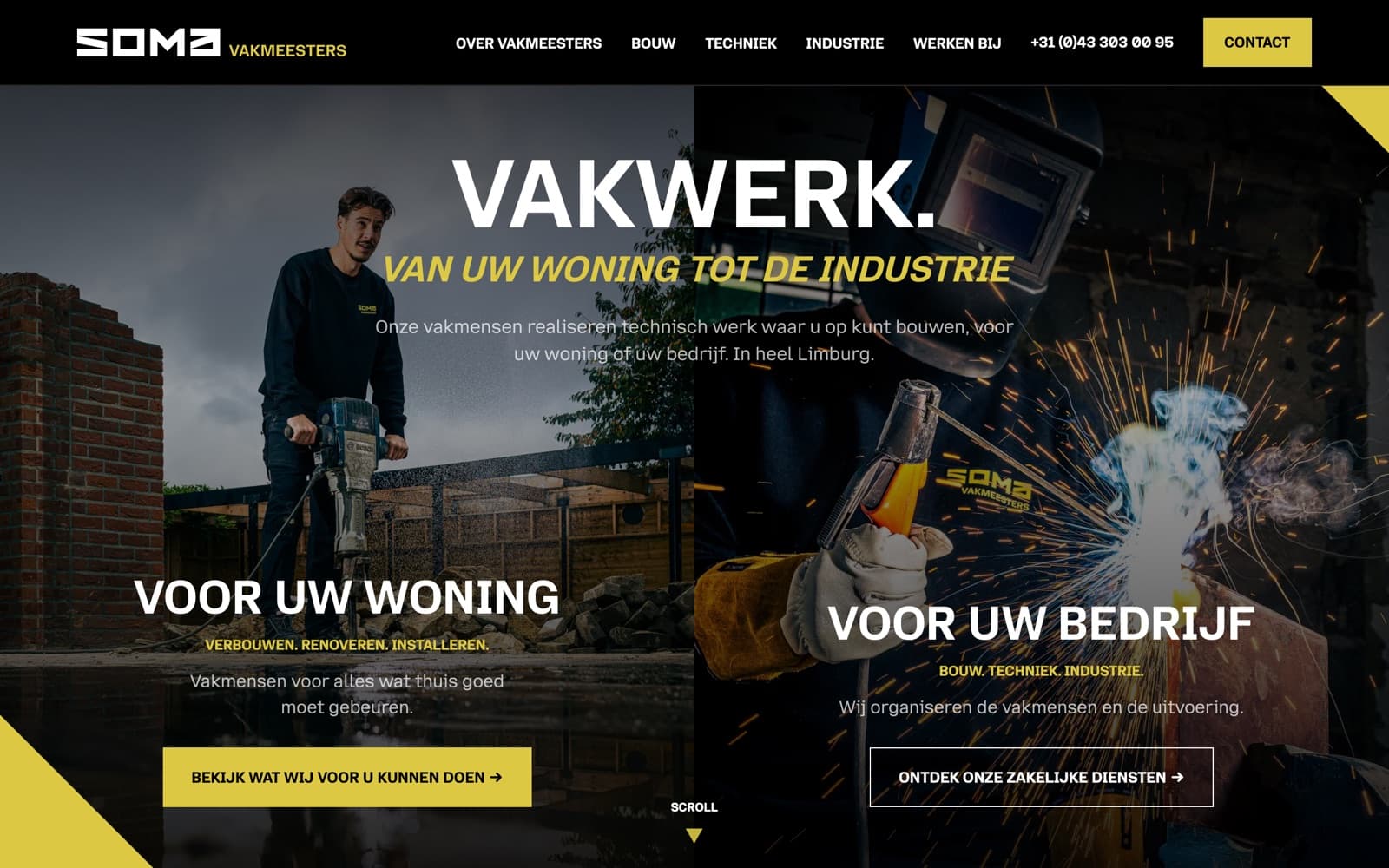
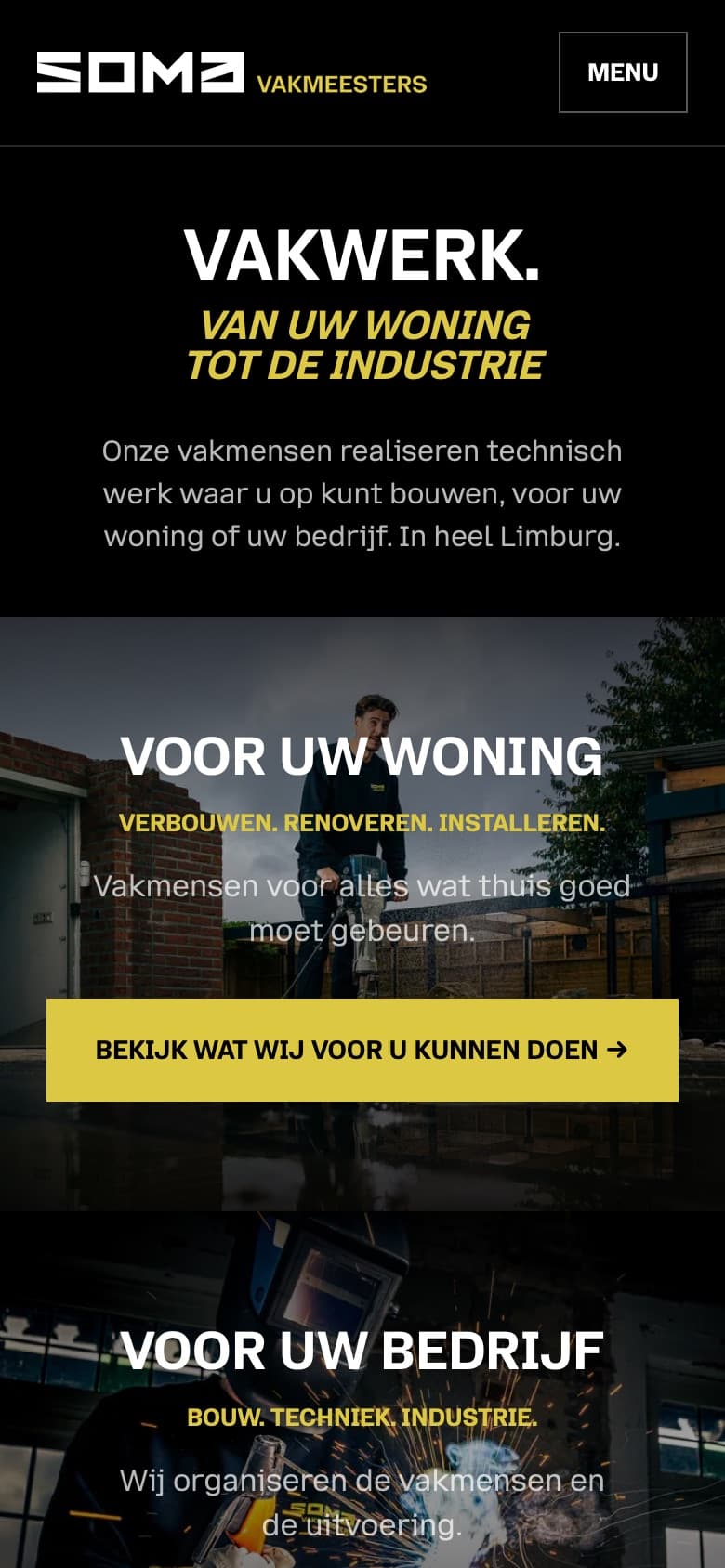
Two doors on the homepage. The page is split in half: for your home, and for your business. Each half has its own photo, its own line and its own button. Nobody has to work out which part of the site is meant for them.
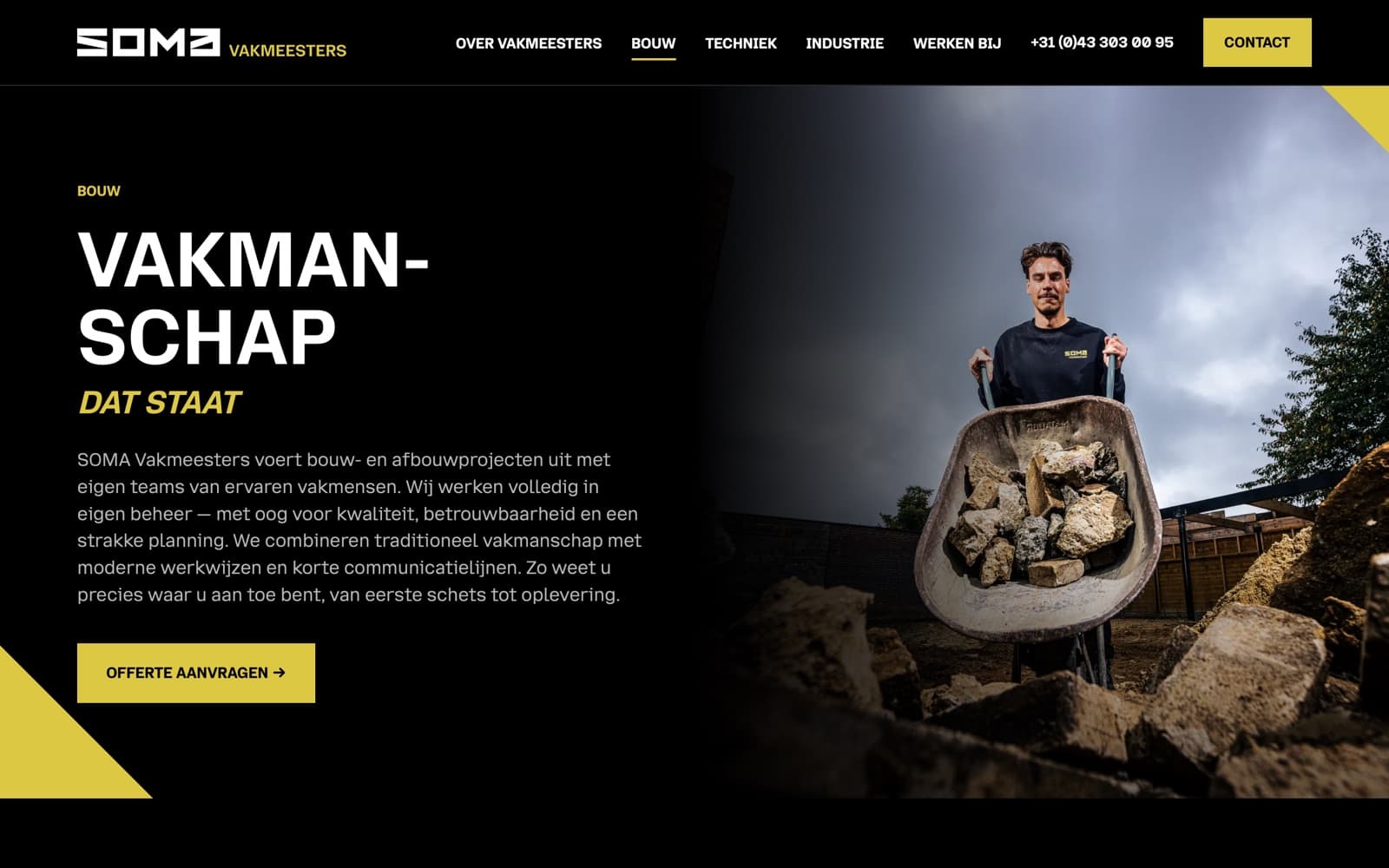
One page per trade. Building, technical and industry each get their own page, with the work listed per specialisation and a quote button on every block. Under the intro there is a short list of what the crews actually do, in plain words.
Frequently asked questions as a chat. The common questions about cost, duration and how a renovation goes sit in a small chat panel with ready answers. A question that isn't there goes straight to the team through the contact form.
Forms that reach a person. A request for a first conversation goes to the right inbox with the details filled in. A message that looks like spam is held back for a look instead of thrown away, so a real customer with an odd message still gets through.
Vacancies and working there
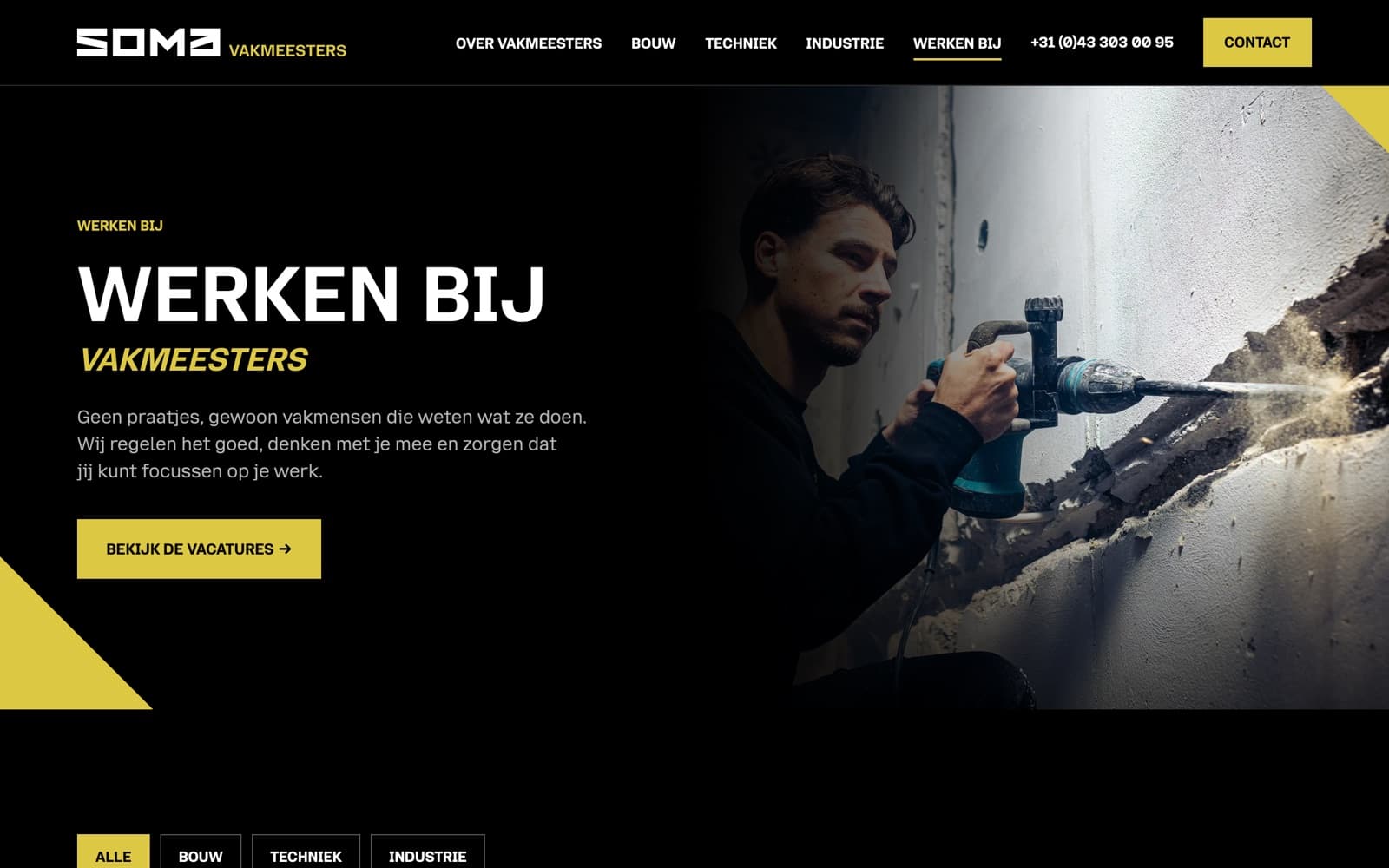
Vacancies the team edits themselves. New roles, changes and closed positions are handled in a simple editor. No developer needed to add a vacancy or fix a line.
Filter by trade. Candidates choose building, technical or industry and see only what fits. Each vacancy has its own page with salary range, hours and a clear way to apply.
Found in Google Jobs. Every vacancy carries the information Google needs to show it as a job, so a plumber looking for work can find the role without ever visiting the homepage.
An open application with no CV. For people without a fitting vacancy there is a short form: name, phone number, a line about yourself. The contact person for new colleagues is on the page, with a WhatsApp button.
Getting found
The rebuild came with a full SEO check at the end of October, and the fixes went live the same week.
- The region in the page titles. South Limburg now sits in the titles and descriptions, so Google knows where the crews work.
- A clear structure for search engines. Every page says what it is, where it sits in the site and who is behind it, and every article names its author.
- Old addresses keep working. Links from the WordPress site, and the old archive pages, send visitors and Google to the right new page.
- Articles that link to the work. The knowledge articles on the site end with a link to the page of the trade they are about.
The group page
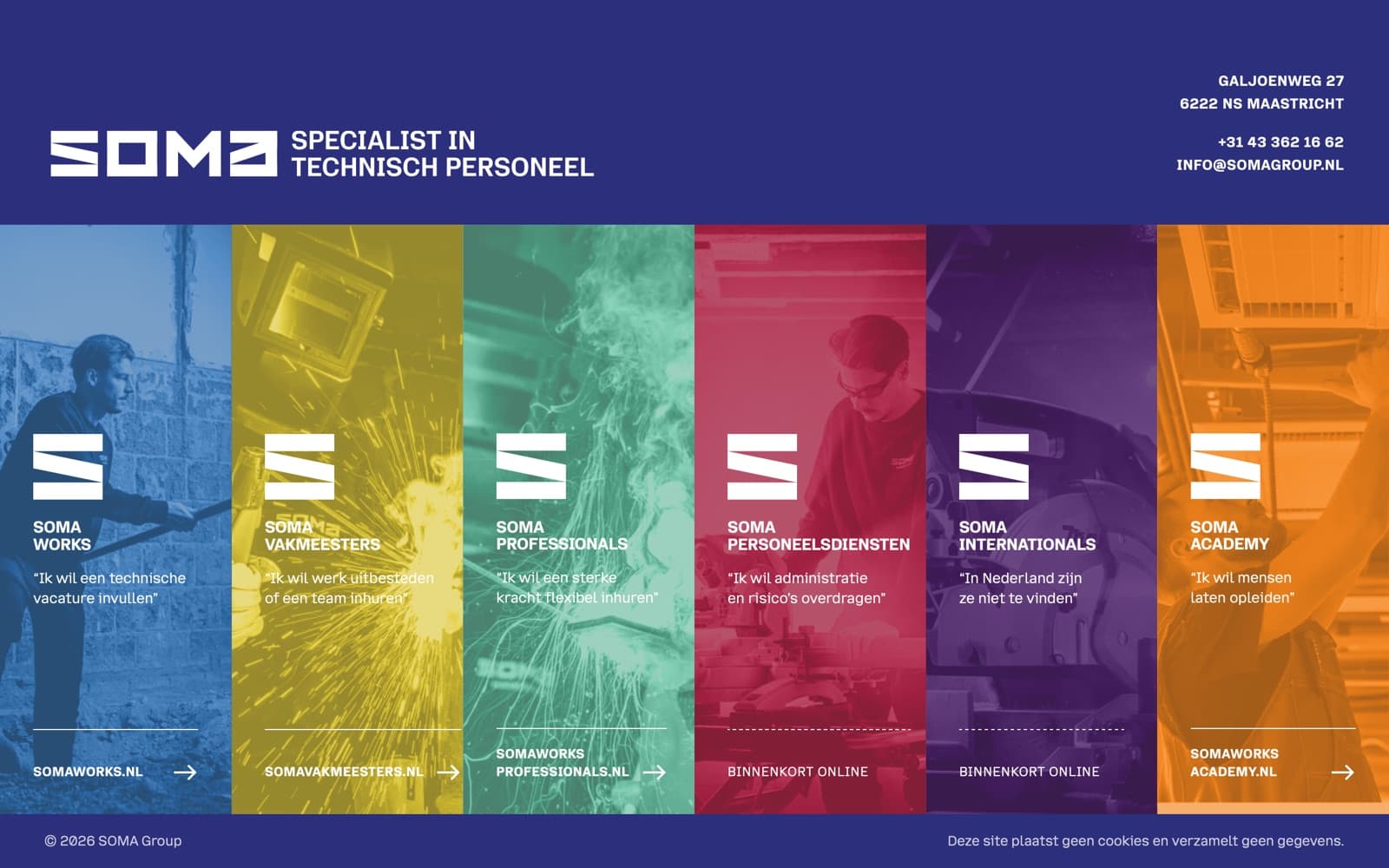
SOMA Vakmeesters is one of several labels in SOMA Group. For the group we built somagroup.nl: one page, the group at the top and its labels below as large coloured panels, each in its own brand colour. It sets no cookies, collects no data and loads nothing from outside, which is why it can be a plain static page.
What changed for them
A visitor can now see within a few seconds whether the site is for them. Vacancies are changed by the team, not by us. Requests and applications arrive by email with everything filled in. And the site is indexed on the real domain, with a structure Google can follow.
What we keep doing
Hosting, updates and backups, small changes to pages and vacancies when the team asks, and SEO follow-up on what Google shows. The vacancy pages and forms are kept working as the team's way of recruiting changes, and the site itself is where new trades and pages get added.
 Visit the sitesomavakmeesters.nl