The situation
Four houses, 30 apartments, and guests who mostly come from Germany, the Netherlands and Belgium: families, couples and people who bring their dog. The old site was built in WordPress with a page builder. It carried the content, the logo and the green and terracotta the guests know.
The brief was to keep what is theirs (the logo, the colours, every legal text, the existing booking system) and rebuild the rest around one goal: a guest picks dates and a house and gets to the booking.
The website
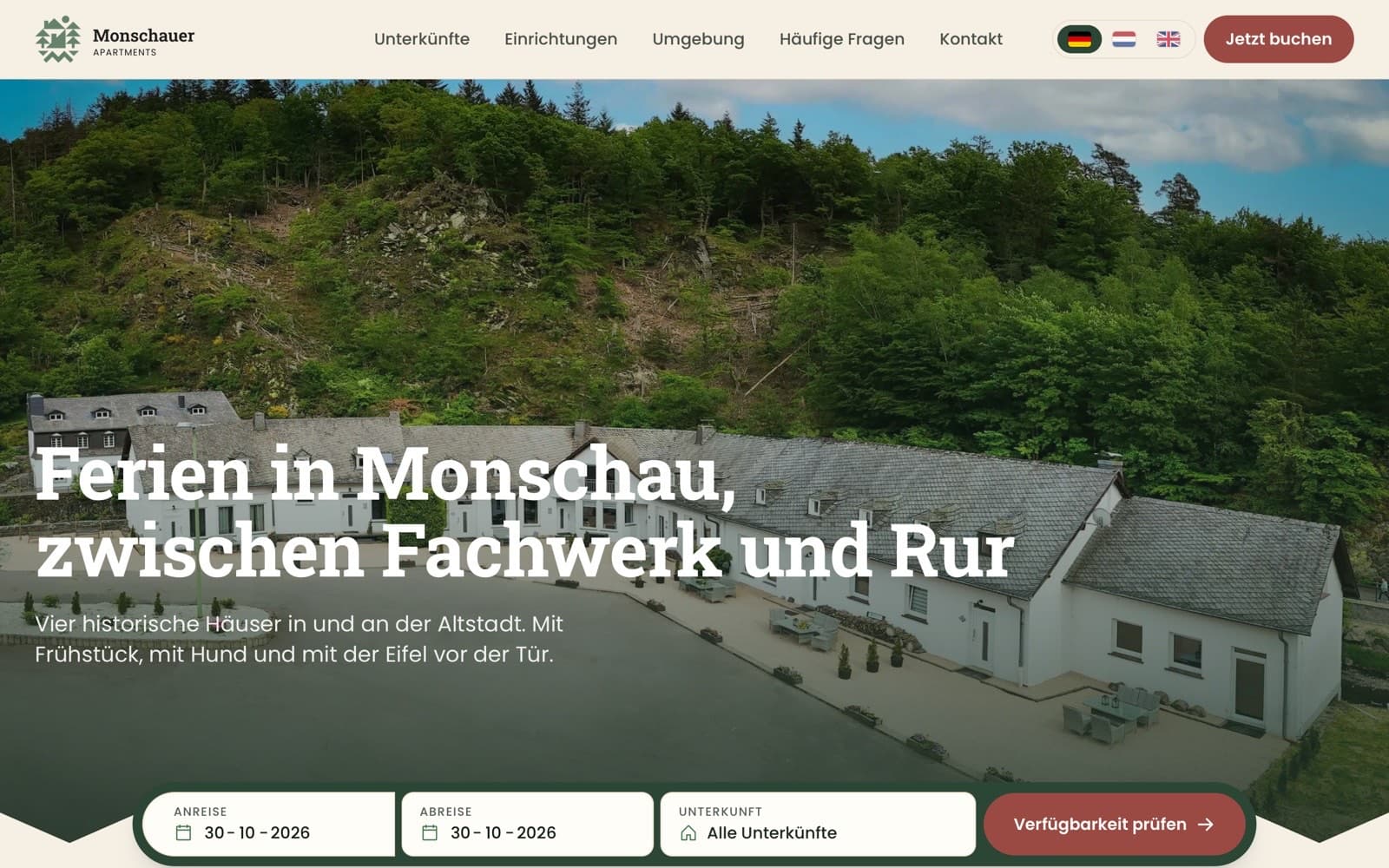
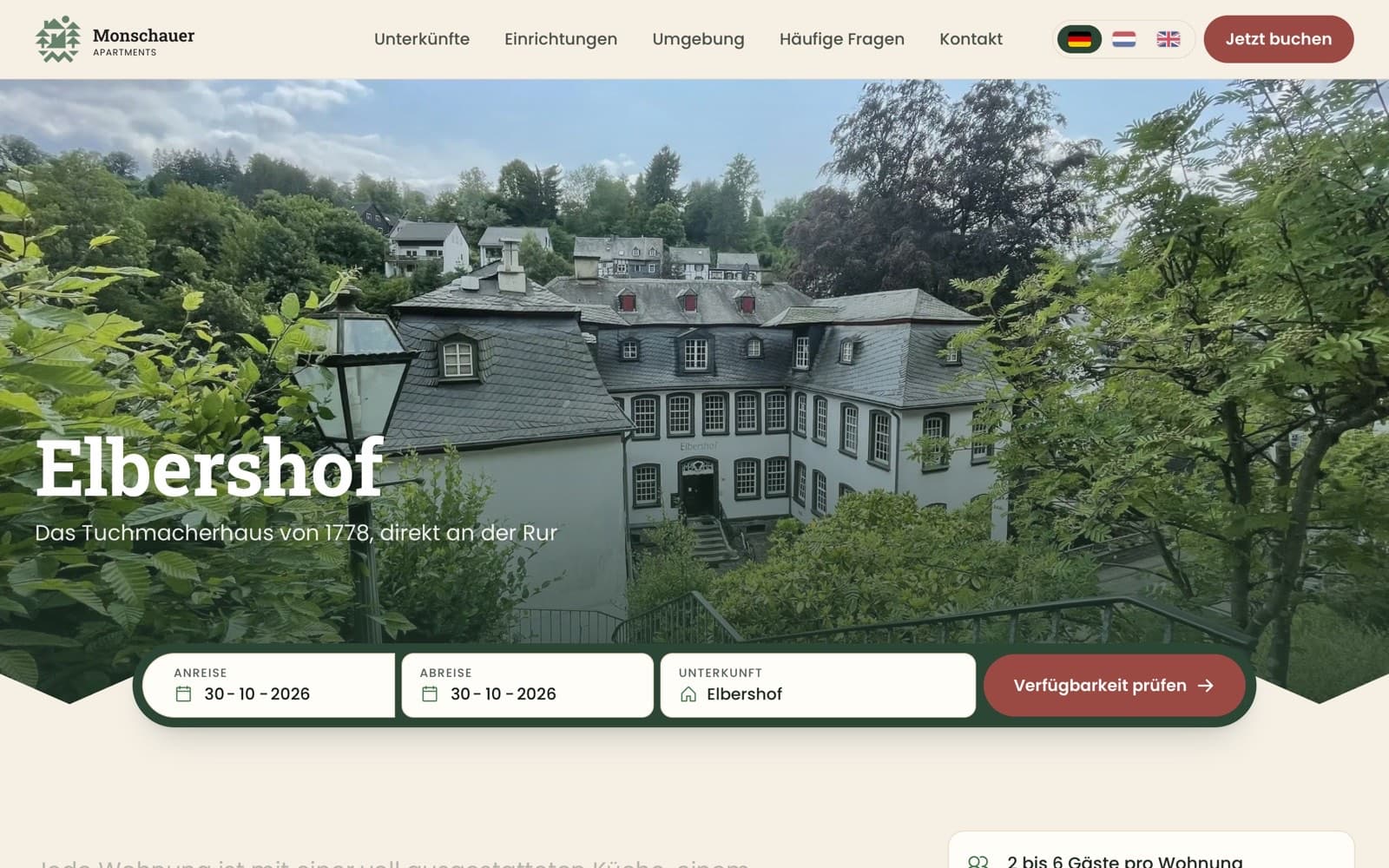
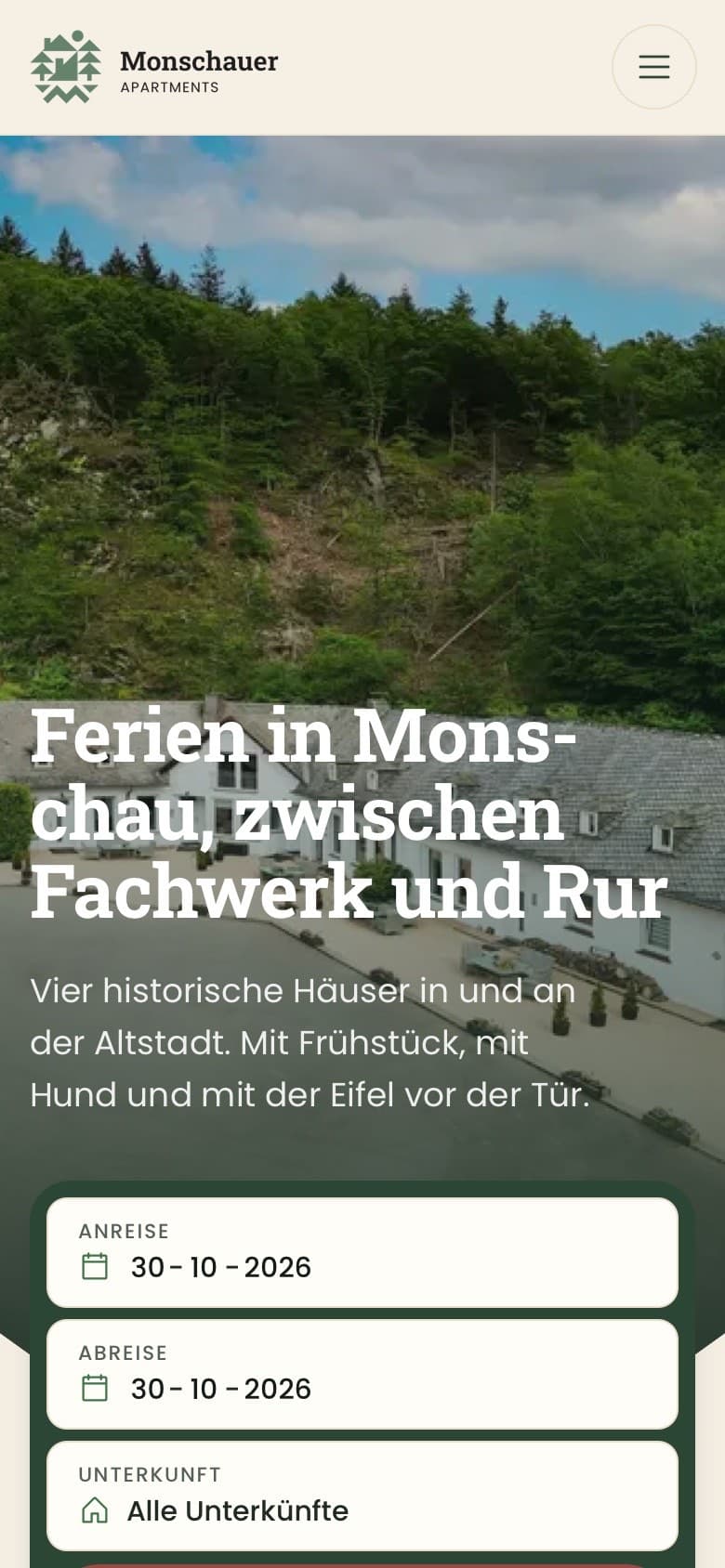
A booking bar on every page. Arrival, departure and house sit on the edge of the opening photo. Pick a house and check availability: the guest lands in the booking system the business already uses, so nothing about how bookings are handled had to change.
Four houses, four stories. The cloth merchant's house of 1778 on the Rur, the island in the river, the half-timbered houses in the old town and the house on the market square each get their own page and their own opening photo. On the overview, every house shows how many guests fit, how many apartments there are, that dogs are welcome and that breakfast can be booked.
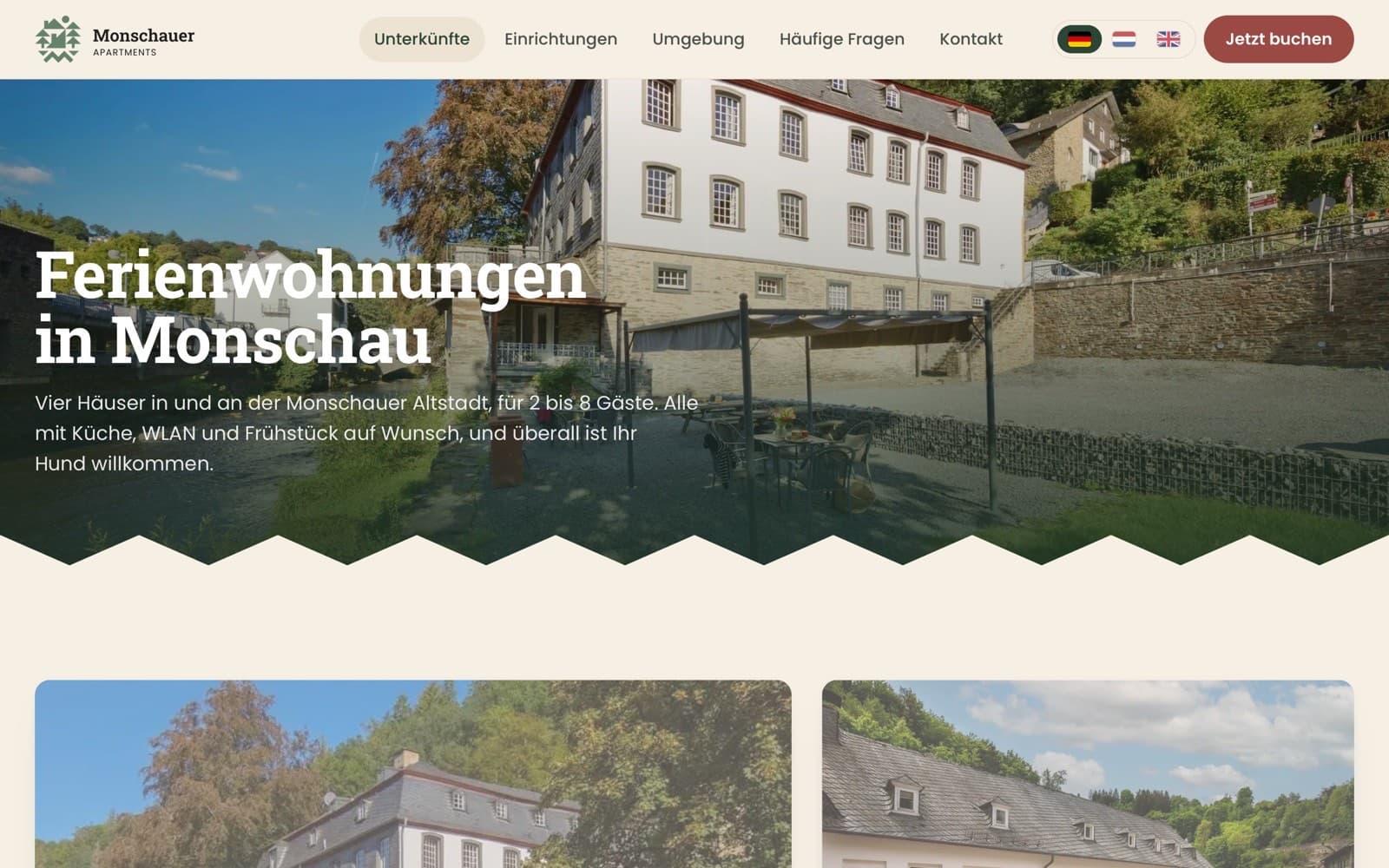
Built from the logo. The roofs and fir trees of the logo became the graphic language: section edges are cut as a zigzag ridge, the page ground is the warm linen colour of the old site, and the terracotta is used for booking buttons only. A guest always knows which button books.
German first, then Dutch and English. German is the main language at the root of the site, Dutch and English sit under their own addresses. A flag switch in the header, and every language tells search engines which page is its counterpart.
Things to do around Monschau. Walking, cycling, the castle, the Eifel national park, Aachen and a high ropes park each have their own page, plus a Christmas market text written fresh for 2026 in all three languages.
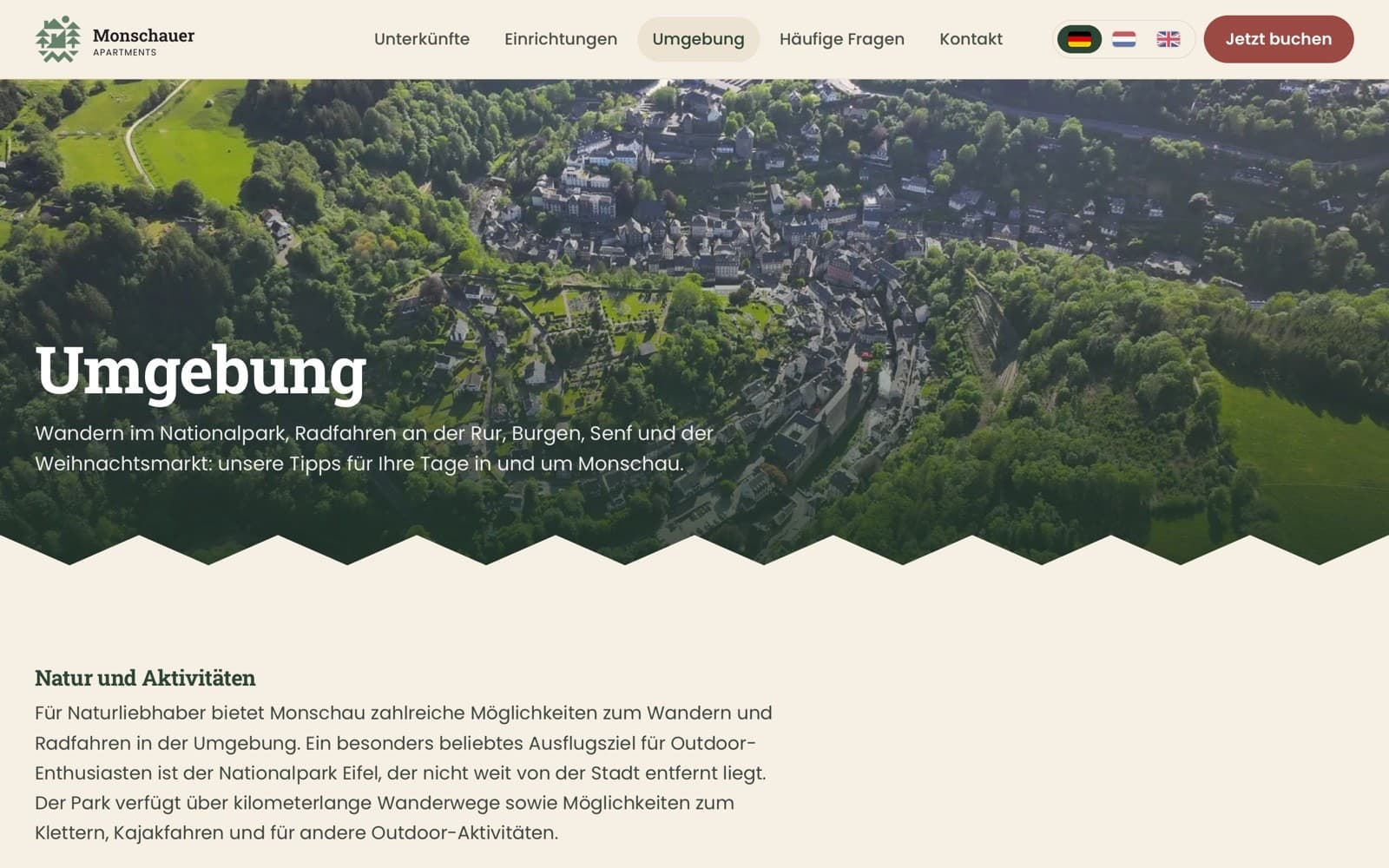
Practical pages. Facilities (breakfast buffet, terrace on the river, parking, bike room, free wifi), a long FAQ about check-in and parking per house, and the legal pages exactly as the owners approved them.
Behind the page
The owners edit the site themselves. Pages, apartments, facilities and news posts live in a CMS with a simple editor. For anything special there is an HTML block, and a page type for fully custom pages, so a new idea does not need a developer.
Enquiries that arrive. The contact form sends to the office inbox. A message that looks like spam is still delivered, marked as such, so a real guest with an odd message is never lost.
Visitor statistics without cookies. A small dashboard in the CMS shows visits per hour, day, week or month, where visitors come from and how often they click through to the booking button, and from which place on the site. No cookie banner is needed for it.
Getting found
A rebuild changes addresses, and old addresses are how people and Google find a site. 123 old addresses now forward to the right new page, including the old shop pages and the old Dutch addresses.
The search groundwork is in place: a sitemap per type of page, structured data, and a message to the search engines when a page changes. Each page is also checked on 17 screen sizes in two browsers, and the accessibility check found nothing serious on the 103 pages of the sitemap.
What changed for them
One site that can be edited by the people who run the houses. A booking bar guests see before they scroll. Addresses from the old site that keep working. And a clear view of which pages guests read before they book.
After launch
The site went live on monschauerapartments.de on 13 October 2026. Since then we have installed the security updates as they were released, added the visitor statistics and the HTML blocks, and adjusted how the contact form handles suspected spam. We host the site and keep it up to date, and the owners know where to ask when they want something changed.
 Visit the sitemonschauerapartments.de